Over the past decades, the music industry has experienced significant changes. Streaming services, social media networks, and online marketing tools have made it possible for independent musicians to distribute their music without the involvement of a major record label. Though these changes created many great chances, they also added to the competitiveness of the industry.
Currently, numerous new pieces of music appear each day in streaming services, and it becomes hard to make yourself heard as an artist with music only. Of course, talent plays its role but, in today's music business, talent alone doesn't make any difference without visibility. And here comes the personal brand of the independent artists – probably, the most important asset nowadays.
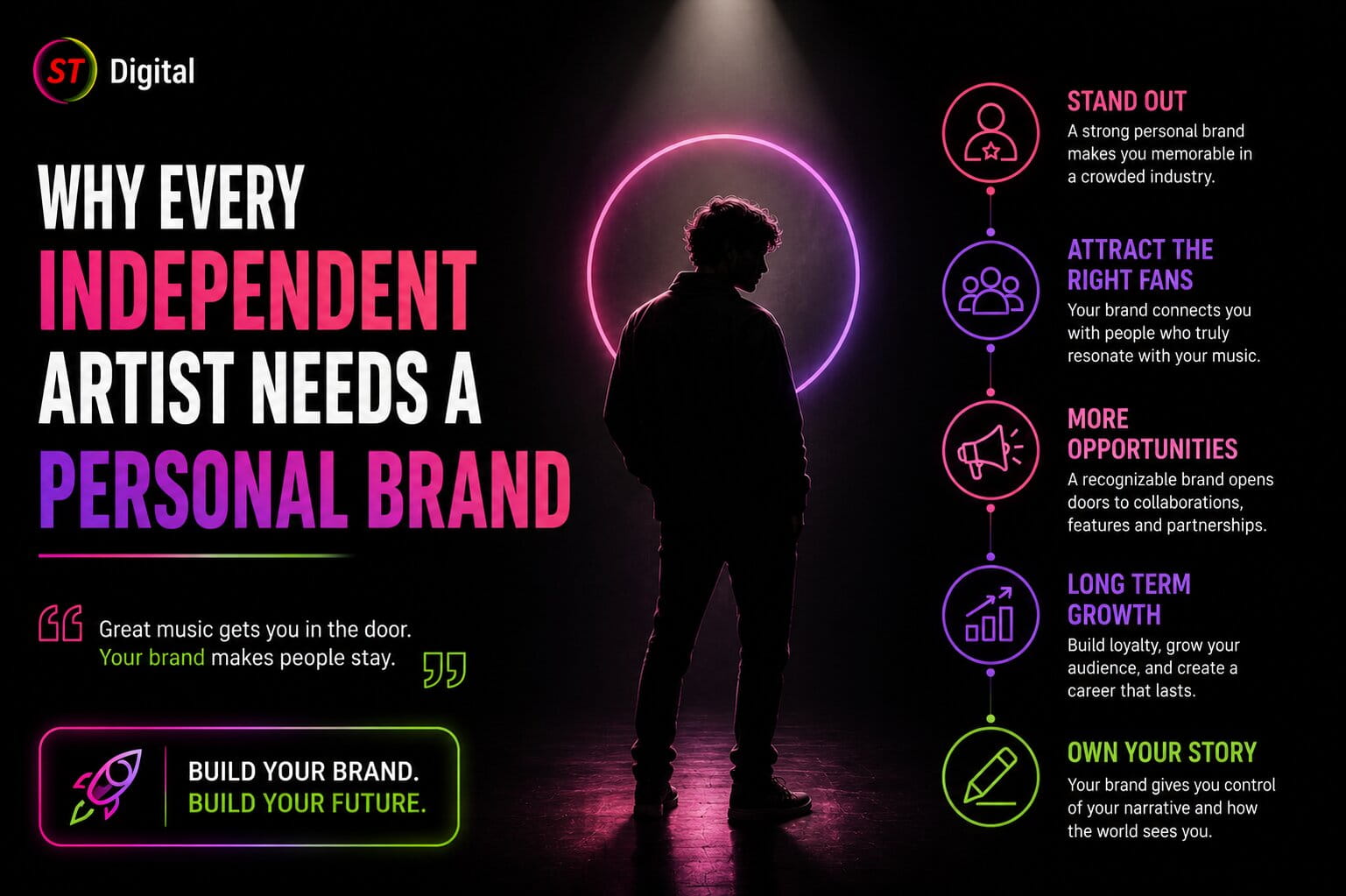
Personal branding helps the artists connect emotionally with the audience, establish trust, prove credibility, and make career prospects for the future. In addition to being known for one specific song, artists are remembered for their identity, values, personality, and everything that comes along with it.
In this guide, we will discuss the importance of independent artist branding and its effect on the career development.
What Is a Personal Brand?
A personal brand is the public perception people have about you as an artist. It goes far beyond your music. It includes your story, visual identity, communication style, personality, values, fashion, stage presence, social media presence, and the emotions people associate with your work.
Your artist personal brand answers questions like:
- Who are you?
- What makes your music unique?
- Why should listeners follow your journey?
- What emotions or experiences do you represent?
- What do you stand for?
People often remember artists because of the complete experience they offer rather than individual songs.
Why Personal Branding Matters More Than Ever
With millions of artists competing for attention, audiences have endless choices. Music streaming platforms make discovering new artists incredibly easy, but they also make replacing them just as easy.
A memorable personal brand for independent artists creates recognition that extends beyond playlists.
When people recognize your identity, they are more likely to:
- Follow your social media
- Stream your new releases
- Attend live performances
- Buy merchandise
- Recommend your music
- Support crowdfunding campaigns
- Stay loyal throughout your career
Your brand transforms casual listeners into dedicated fans.
Your Brand Creates Trust
Trust is one of the biggest factors influencing whether someone continues supporting an artist.
Listeners naturally connect with artists who appear authentic, consistent, and genuine.
Consistency across your music, visuals, messaging, and online presence reassures fans that they know who you are.
This doesn't mean pretending to be perfect.
Instead, it means allowing your audience to experience your authentic personality while remaining true to your artistic vision.
Strong independent artist branding builds familiarity, and familiarity builds trust.
Personal Branding Makes You Memorable
Think about your favorite artists.
You probably remember:
- Their fashion style
- Album artwork
- Color palette
- Music videos
- Social media personality
- Signature performances
- Storytelling style
Their music is only one part of their identity.
Successful artists create a complete experience that audiences instantly recognize.
Independent musicians can achieve the same by developing clear music branding that reflects their unique identity.
A Strong Brand Attracts the Right Audience
Not everyone will enjoy your music—and that's perfectly okay.
The goal isn't to appeal to everyone.
The goal is to attract listeners who genuinely connect with your artistic vision.
When you build a personal brand as an artist, your content naturally attracts people who share your interests, values, and musical preferences.
These listeners are more likely to become:
- Loyal fans
- Active supporters
- Concert attendees
- Merchandise buyers
- Long-term community members
A smaller, engaged audience is often more valuable than a large but disconnected following.
Branding Helps You Stand Out in a Crowded Industry
Thousands of talented musicians release incredible music every day.
Talent alone no longer guarantees success.
Your personal brand gives audiences a reason to remember you among countless artists.
Maybe you're known for:
- Honest songwriting
- Cinematic visuals
- Positive messaging
- Cultural influences
- Experimental production
- Minimalist aesthetics
- Live acoustic performances
Your uniqueness becomes your competitive advantage.
Strong branding for musicians ensures that people associate your name with a specific identity instead of just another playlist.
Personal Branding Opens More Career Opportunities
Music is no longer the only source of income for independent artists.
Brands, event organizers, media companies, and sponsors often evaluate an artist's online presence before offering collaborations.
A professional brand increases opportunities such as:
- Brand partnerships
- Festival bookings
- Podcast interviews
- Media coverage
- Sponsored content
- Speaking engagements
- Music licensing
- Creative collaborations
A well-developed artist's personal brand demonstrates professionalism and reliability.
Social Media Works Better with a Clear Brand
Many artists struggle with social media because they only post about new releases.
Successful creators understand that audiences follow people—not promotions.
A consistent personal brand provides endless content ideas.
You can share:
- Behind-the-scenes moments
- Songwriting sessions
- Studio recordings
- Daily routines
- Personal stories
- Fan interactions
- Performance clips
- Creative inspirations
- Educational content
When your content reflects your identity, followers become emotionally invested in your journey.
Branding Builds Emotional Connections
Music creates emotions.
Your personal brand strengthens those emotions by giving listeners someone they can relate to.
People support artists whose stories inspire them.
Sharing your challenges, creative process, goals, and achievements allows fans to become part of your journey.
Over time, this emotional connection becomes stronger than any marketing campaign.
Fans aren't just listening to your songs—they're supporting your dream.
A Personal Brand Supports Long-Term Career Growth
Songs may trend for a few weeks.
A personal brand can last for decades.
Many artists experience viral success but struggle to maintain momentum because audiences remember the song—not the artist.
A recognizable brand ensures that fans continue following your career regardless of changing musical trends.
This creates sustainable growth rather than temporary popularity.
How to Build a Personal Brand as an Independent Artist
Creating a memorable brand doesn't happen overnight. It requires clarity, consistency, and authenticity.
Here are practical steps to get started:
1. Define Your Identity
Ask yourself:
- What inspires your music?
- What message do you want to share?
- What values matter to you?
- What makes your sound unique?
Your answers form the foundation of your brand.
2. Develop a Consistent Visual Style
Choose visual elements that reflect your personality:
- Logo
- Color palette
- Typography
- Photography style
- Album artwork
- Clothing style
Consistency improves recognition across platforms.
3. Tell Your Story
Fans connect with stories more than promotional posts.
Share:
- Your musical journey
- Challenges you've overcome
- Inspiration behind songs
- Creative process
- Future goals
Authentic storytelling makes your artist's personal brand relatable.
4. Be Consistent Across Platforms
Whether someone discovers you on Instagram, YouTube, Spotify, or TikTok, your branding should feel familiar.
Maintain consistency in:
- Profile photos
- Bios
- Colors
- Tone of voice
- Posting style
- Messaging
5. Engage with Your Audience
Branding isn't only about appearance.
It's also about relationships.
Reply to comments.
Thank you supporters.
Host live sessions.
Ask questions.
Celebrate milestones together.
A loyal community grows through genuine interaction.
6. Keep Improving
Your brand should evolve naturally as your music and career grow.
Regularly evaluate:
- Audience feedback
- Engagement metrics
- Visual consistency
- Content performance
- Career goals
Continuous improvement keeps your brand relevant without losing authenticity.
Common Personal Branding Mistakes to Avoid
Many artists unintentionally weaken their brand by making avoidable mistakes.
Some of the most common include:
- Copying another artist's identity
- Changing visual styles too frequently
- Posting inconsistently
- Ignoring audience engagement
- Focusing only on self-promotion
- Having unclear messaging
- Using poor-quality visuals
- Pretending to be someone they're not
Authenticity will always outperform imitation.
Conclusion
Creating an independent artist personal brand is not only highly recommended, but it's also a necessity to create a sustainable career in music. As an independent musician, your personal brand will be the thing that will make you distinguishable, noticeable, and identifiable.
The process of independent artist branding is much more than just using cool logos or creating beautiful images on social media. Branding is about conveying your identity and values, forming strong relationships with your fans, and building bridges that go beyond releasing your music. Invest enough time in building a music brand and being consistent with your fans, and they will turn into lifetime supporters of your work.
Keep in mind that people may find you because of a good song, but they will remain with you because of the person that created that song.
Frequently Asked Questions (FAQs)
1. What is a personal brand for independent artists?
Personal brand for independent artists refers to the unique identity formed by combining your music, personality, values, looks, communication and story. It is what makes people recognize you as an artist beyond just your music.
2. How is personal branding beneficial to musicians?
Personal branding assists in distinguishing musicians in a crowded market, builds trust, attracts loyal fans, increases recognition and opens up various opportunities including collaborations and gigs.
3. Can an emerging artist begin building his/her brand?
Absolutely! Actually, it's a good idea to do so right from the start since it will help establish your identity and make it easier for the audience to relate to you.
4. What can I do to create a personal brand as an artist?
I can start off by developing my identity, understanding my target audience, using consistent visuals, telling my story, generating interesting content, and interacting with my followers.
5. Is personal branding only about social media?
Absolutely not! Social media plays an important role but the concept of personal branding also involves other aspects including my music, live shows, interviews, web presence, visuals, merchandise, etc.
6. How does branding help independent artists earn more money?
It helps them increase their streams, merchandise sales, ticket sales, brand deals, sponsorships, licensing agreements, crowdfunding donations, and premium collaborations.
7. What are the most common mistakes that artists make in building their artist brands?
The most common mistakes are copying other artists, inconsistency in messages, poor-quality images, lack of audience engagement, inconsistency in frequency of posts, and focusing solely on promotion rather than story-telling.
8. How long does it take to create an effective artist brand?
A lasting brand takes time to develop and is never truly complete. It may start getting recognized after several months of constant effort but developing a good reputation may take years of continuous work.
9. Does my personal brand need to be updated as my music changes?
Yes, it needs to be updated in accordance with the evolution of your artistic expression. The main thing is to stay authentic and yet be consistent enough to be recognizable by your followers.
10. Will my personal brand help me to be signed or booked to perform at events?
Definitely. Personal brand will definitely play an important role when trying to get signed or booked since record labels, event organizers, media companies, and brands consider personal brand when making such decisions.

 September 22, 2026