When an independent artist releases a song, the audio file is only one part of the release.
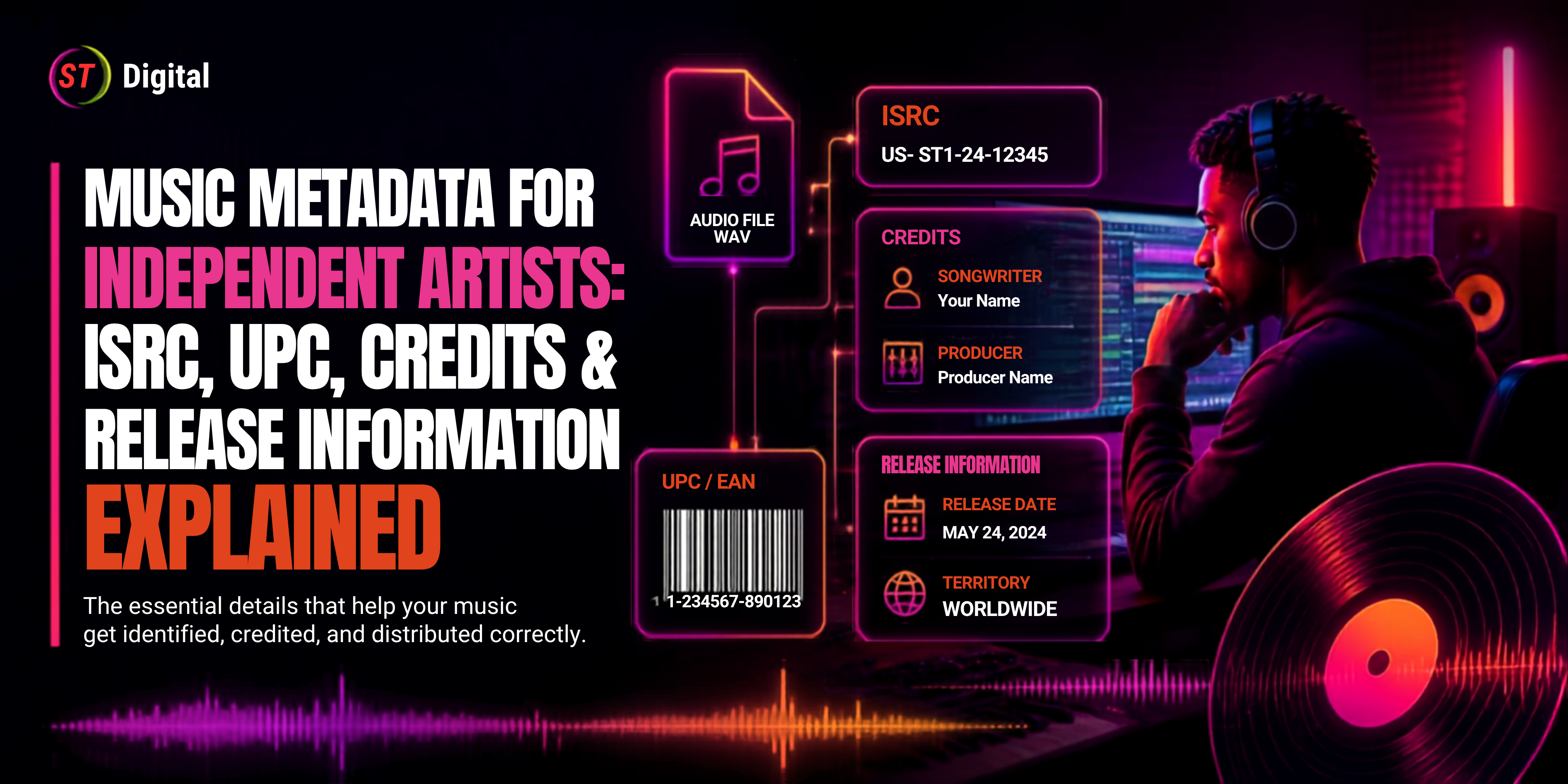
Behind every song on Spotify, Apple Music, JioSaavn, YouTube Music and other digital platforms is a collection of information that tells platforms who created the music, what the song is called, who owns the recording, when it was released and how the recording should be identified.
This information is called music metadata.
For independent artists, understanding metadata is essential because incorrect or incomplete information can affect artist attribution, credits, catalog organization and royalty reporting.
Two terms that often confuse new artists are ISRC and UPC.
So, what is the difference between ISRC and UPC? Which one identifies a song? Which one identifies a release? And what other information should you prepare before distributing your music?
Let's break everything down.
What Is Music Metadata?
Music metadata is the information associated with a recording or release.
It provides digital music platforms and distributors with the details needed to identify, organize and display your music correctly.
Music metadata can include:
Why Is Music Metadata Important?
Imagine that you release a song but enter the wrong artist name.
Or your producer's name is missing.
Or the release date is incorrect.
Or an existing ISRC is replaced with a new one.
These may look like small administrative mistakes, but they can create catalog and attribution problems.
Accurate metadata helps ensure that your music is connected with the correct:
Artist
Recording
Release
Contributors
Rights information
Identifiers
What Information Is Included in Music Metadata?
1. Artist Name
Your artist name is one of the most important pieces of metadata.
For example:
Artist: Rahul Rathore
Use the same artist identity consistently across your releases.
If you already have music available on Spotify or another streaming service, provide the correct artist profile information to your distributor.
This becomes particularly important when multiple artists have similar names.
2. Song Title
Your song title should be entered exactly as intended.
For example:
Correct:
Kesariya
Avoid turning the metadata field into promotional copy such as:
Kesariya Official Video Latest Viral Song 2026
unless those words are genuinely part of the official title and comply with the distributor and platform requirements.
3. Album or EP Title
If your release is an album or EP, provide the official release title.
For a single, the song title may also function as the release title.
Make sure spelling and capitalization are consistent throughout your artwork, metadata and promotional material.
4. Featured Artists
If another artist appears on your recording, enter their role correctly.
For example:
Main Artist: Artist A
Featured Artist: Artist B
Don't accidentally enter a producer or songwriter as a featured artist simply because they contributed to the recording.
5. Composer and Songwriter Credits
Your metadata should accurately identify the people who wrote the underlying song.
Depending on the release, this can include:
Composer
Songwriter
Lyricist
Additional songwriter
Credits are important for properly identifying the creative contributors to your music.
6. Producer Credits
Don't forget the producer.
A production team can include:
Music producer
Co-producer
Additional producer
Vocal producer
Remix producer
Provide the appropriate credits according to the distributor's available fields and your agreements.
7. Genre
Genre helps classify your release.
Examples include:
Pop
Hip-Hop
Rap
Rock
Electronic
Folk
Devotional
Classical
Regional
Indie
Choose the genre that genuinely represents your music rather than selecting a category simply because it seems popular.
8. Language
For Indian artists, language is especially important.
Your song might be:
Hindi
Punjabi
Rajasthani
Haryanvi
Marathi
Gujarati
Bengali
Bhojpuri
Tamil
Telugu
Kannada
Malayalam
English
Instrumental
Enter the appropriate language information during distribution.
9. Release Date
Your release date tells platforms when the recording is intended to become available.
Don't enter the date casually.
Consider your:
Distribution timeline
Marketing campaign
Social-media promotion
Playlist pitching
Music-video launch
Creator collaborations
Prepare your release information well before submitting your music.
What Is ISRC?
ISRC stands for International Standard Recording Code.
It is a unique identifier for a specific sound recording or music video.
An ISRC is associated with the recording, not simply the song title.
For example, imagine you have:
Song: Mere Dil
Original Studio Recording: ISRC A
Live Recording: ISRC B
Remix: ISRC C
These can represent different recordings and therefore require distinct identification.
What Does an ISRC Identify?
An ISRC identifies a particular recording.
It does not identify:
Think of an ISRC as an identification number for a particular recording.
What Is UPC?
UPC stands for Universal Product Code.
In music distribution, UPC/EAN-style identifiers are commonly associated with the release or product, rather than an individual recording.
A release can contain one or multiple tracks.
For example:
Single
Release: Mere Dil
UPC/EAN: Release identifier
ISRC: Recording identifier
Album
Release: My First Album
UPC/EAN: Album-level identifier
Track 1 → ISRC
Track 2 → ISRC
Track 3 → ISRC
Track 4 → ISRC
The exact identifier terminology and workflow can vary between distributors and platforms, so always follow the current requirements of your distributor.
ISRC vs UPC: What Is the Difference?
This is one of the most common questions among independent artists.
FeatureISRCUPC/EANFull formInternational Standard Recording CodeUniversal Product CodeIdentifiesIndividual recordingRelease/productUsed forSpecific sound recording or music videoRelease/catalog identificationExampleOne particular song recordingSingle, EP or album releaseTrack-level?YesGenerally release-levelMain purposeIdentify recordingsIdentify the release/product
Simple way to remember it:
ISRC = Recording
UPC/EAN = Release
That's the easiest way to understand the ISRC UPC difference.
ISRC and UPC Example
Suppose an artist releases an EP containing four songs.
EP
Title: Rajasthan Vibes
UPC/EAN: One identifier for the EP release
Tracks
Track 1: Kesariya
→ ISRC 1
Track 2: Mhari Dharti
→ ISRC 2
Track 3: Rangilo Rajasthan
→ ISRC 3
Track 4: Tharo Pyar
→ ISRC 4
So, one release can contain multiple individually identified recordings.
Does Every New Release Need a New ISRC?
Not necessarily.
The important question is whether you are using the same recording or a different recording.
If you are transferring the same master recording between distributors, you generally should maintain the existing ISRC rather than treating it as a brand-new recording.
A genuinely new recording, such as a new studio version or substantially different recording, may require a different identifier.
Always verify your distributor's current instructions.
What Happens If You Enter the Wrong ISRC?
Incorrect recording identifiers can create catalog problems.
Potential issues can include:
Incorrect recording association
Duplicate catalog entries
Difficulty matching an existing recording
Reporting complications
Problems when transferring catalogs between distributors
That's why artists should maintain an organized catalog database.
What Is a Catalog Metadata Sheet?
A catalog metadata sheet is a document where you maintain all the important information about your releases.
For example:
FieldExampleArtistRahul RathoreSongKesariyaVersionOriginalLanguageHindiGenreIndie PopComposerRahul RathoreLyricistAmit SinghProducerDJ ExampleISRCXX-XXX-26-XXXXXRelease Date2026-10-15LabelIndependentUPC/EANRelease identifier
Maintaining this information makes future distribution much easier.
Why Credits Matter for Independent Artists
Many independent artists focus on the vocalist and forget the rest of the creative team.
But a song can involve:
Singer
Songwriter
Composer
Producer
Engineer
Mixing engineer
Mastering engineer
Musician
Featured artist
Remixer
Accurate credits help make sure the right people are associated with the recording.
Music Metadata and Royalties
Metadata can also play a role in royalty administration.
If information about a recording, songwriter, publisher or rights holder is incomplete, matching usage to the appropriate parties can become more difficult.
This is why metadata should not be treated as an afterthought.
Music Metadata Checklist for Independent Artists
Before submitting a song to your distributor, check:
Artist Information
Track Information
Song title
Version title
Track duration
Language
Genre
Credits
Identifiers
Release Information
Rights
How to Prepare Metadata Before Uploading Your Song
The easiest workflow is to prepare your metadata before opening the distributor dashboard.
Create a spreadsheet with columns such as:
Artist Name
Song Title
Version
Featured Artist
Composer
Lyricist
Producer
Language
Genre
Duration
ISRC
UPC/EAN
Release Date
Copyright
Label
Then review the spreadsheet before entering the information into your distributor.
This reduces the chance of making repeated mistakes.
Music Metadata for Spotify Releases
Spotify receives music through distributors rather than artists simply uploading a standard release directly to Spotify.
Your metadata preparation should therefore happen before distribution.
If you're preparing your first release, you can follow our complete how to upload a song on Spotify in India guide, which explains the broader process of preparing your audio, artwork, metadata, release date and submitting your song for distribution.
This guide focuses specifically on music metadata, ISRC, UPC, credits and release information, while the Spotify upload guide covers the complete distribution workflow.
Frequently Asked Questions (FAQs)
1. What is music metadata?
Music metadata is the information associated with a recording or release, including artist name, song title, credits, release date, genre, identifiers and other catalog information.
2. What is an ISRC?
ISRC stands for International Standard Recording Code. It is used to identify an individual sound recording or music video.
3. What is a UPC in music?
UPC, or Universal Product Code, is commonly used as a release/product identifier in music distribution. The exact identifier used by a distributor may also be an EAN or another release identifier.
4. What is the difference between ISRC and UPC?
ISRC is associated with an individual recording, while UPC/EAN is generally associated with a release or product containing one or more tracks.
5. Does every song need an ISRC?
Individual sound recordings should have an appropriate recording identifier. Follow your distributor or ISRC agency's current process for assigning or obtaining one.
6. Can I keep the same ISRC when changing distributors?
If it is the same recording, the existing ISRC generally remains associated with that recording. Always verify the process with your new distributor.
7. Why are song credits important?
Credits identify the people who contributed to a recording, such as artists, songwriters, producers and engineers.
8. Can incorrect metadata affect royalties?
Incomplete or incorrect metadata can make it harder to correctly match music usage with the appropriate rights holders.
9. What metadata should I prepare before distributing a song?
Prepare your artist name, song title, version, contributors, genre, language, release date, rights information, ISRC and applicable release identifier.
10. Where should I store my music metadata?
Maintain a master spreadsheet or catalog database containing the metadata and identifiers for every release.

 October 7, 2026