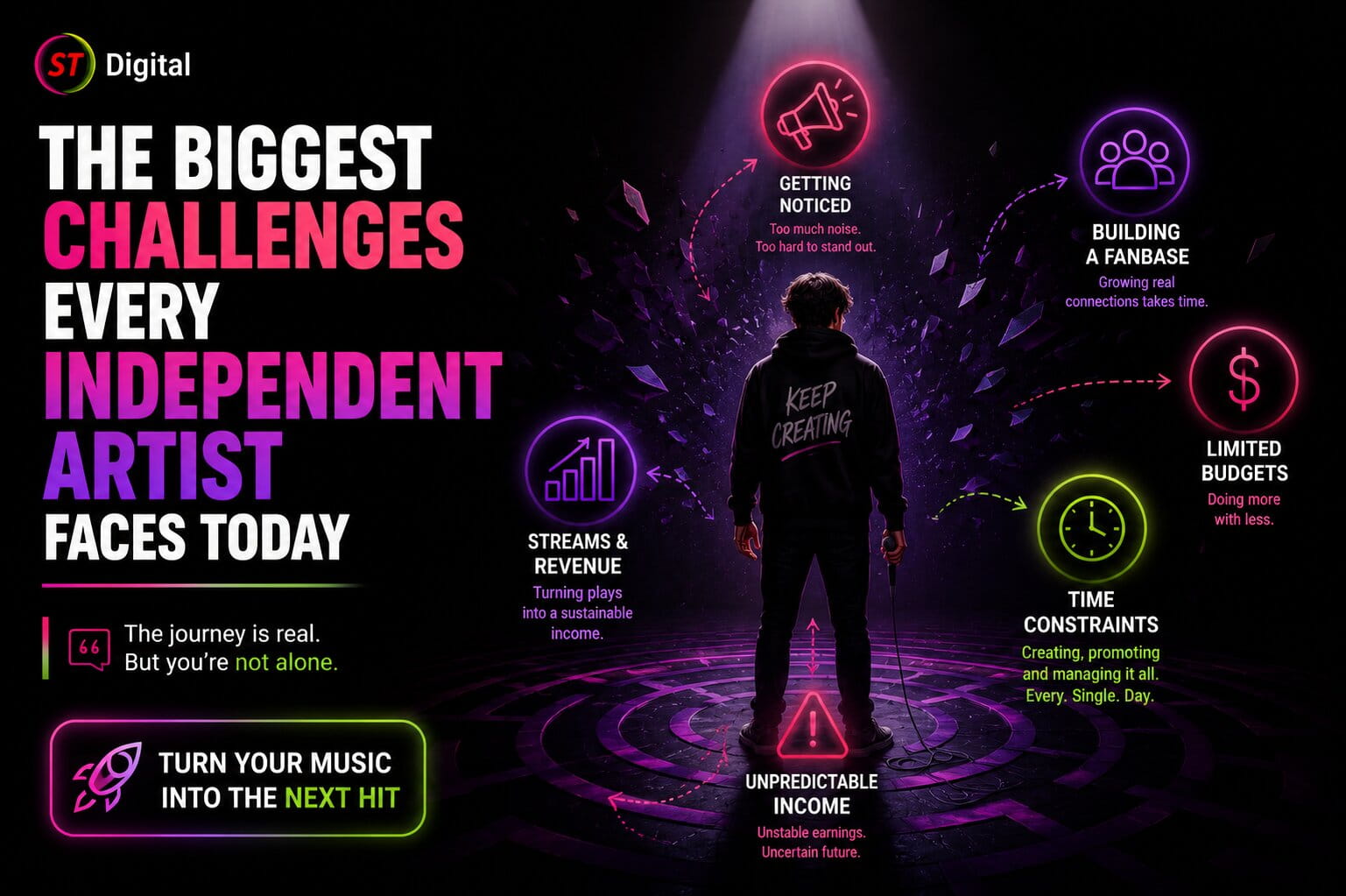
The Biggest Challenges Every Independent Artist Faces Today
The music industry has undergone numerous transformations during the past decade. Owing to digital distribution, streaming sites, and social media, artists no longer require record labels to release music on a global scale. Even though these changes have created amazing possibilities, they have also led to an extremely competitive situation in which thousands of songs are released daily.
Today's independent artists have more creative freedom than ever, but also bear all those obligations that were previously managed by labels. From production, promotion, branding, finances, everything must be handled by an independent musician himself, along with producing great music.
Recognizing the challenges each independent artist has to face is one of the first steps towards solving them. No matter if you're a novice musician or have already gathered a fan base around yourself, knowledge about these obstacles will definitely come in handy for you to succeed in the future.
Let's discuss the biggest independent artist challenges and how to overcome them.
1. Standing Out in an Overcrowded Music Industry
One of the biggest music industry challenges is visibility. Every day, tens of thousands of new songs are released across various streaming platforms, making it increasingly difficult for artists to capture listeners' attention.
Simply producing great music is no longer enough. Independent artists must develop a unique identity that distinguishes them from countless others.
How to overcome it:
- Define your musical identity.
- Develop a recognizable visual style.
- Tell authentic stories through your music.
- Create consistent branding across all platforms.
- Focus on building a loyal community rather than chasing viral success.
A memorable artist brand often leaves a stronger impression than a single hit song.
2. Limited Marketing Budget
Large record labels invest significant amounts in advertising, promotions, public relations, and playlist campaigns. Independent musicians often have limited resources and must market themselves strategically.
Without effective music marketing, even exceptional songs can go unnoticed.
Cost-effective marketing ideas:
- Create engaging short-form videos.
- Share behind-the-scenes content.
- Collaborate with other creators.
- Build an email newsletter.
- Use organic social media consistently.
- Invest carefully in targeted advertising.
Marketing is no longer optional—it's an essential part of every independent music career.
3. Managing Multiple Roles
Today's independent artist is much more than a musician.
They often become:
- Songwriter
- Producer
- Social media manager
- Video creator
- Graphic designer
- Business owner
- Accountant
- Event organizer
- Public relations manager
Managing all these responsibilities while staying creatively inspired can quickly become overwhelming.
Tips for better management:
- Create weekly schedules.
- Automate repetitive tasks.
- Use project management tools.
- Outsource when possible.
- Prioritize high-impact activities.
Learning to balance creativity with business responsibilities is one of the most valuable skills an artist can develop.
4. Building a Strong Personal Brand
Your music introduces people to your sound, but your brand gives them a reason to remember you.
Artist branding involves your:
- Visual identity
- Personality
- Story
- Communication style
- Values
- Audience experience
Strong branding creates emotional connections with fans and encourages long-term loyalty.
Instead of copying successful artists, focus on presenting your authentic personality consistently across every platform.
5. Low Streaming Revenue
Streaming platforms have made music accessible to listeners worldwide, but earning substantial income from streams alone remains difficult.
Most independent musicians discover that millions of streams are often needed to generate significant earnings.
Because of this reality, relying solely on streaming platforms is rarely sustainable.
Diversify your income through:
- Live performances
- Merchandise
- Fan memberships
- Music licensing
- Teaching music
- Brand collaborations
- Exclusive content
- Crowdfunding
Successful artists often combine multiple income streams rather than depending on a single source.
6. Growing and Retaining an Audience
Attracting listeners is challenging.
Keeping them engaged is even harder.
Many artists experience temporary growth after a viral moment but struggle to convert casual listeners into dedicated fans.
Long-term audience growth requires consistency.
Build stronger fan relationships by:
- Responding to comments.
- Hosting live sessions.
- Sharing personal stories.
- Releasing music consistently.
- Rewarding loyal supporters.
- Creating exclusive experiences.
Fans connect with artists they feel they know personally.
7. Keeping Up with Constant Algorithm Changes
Social media algorithms evolve constantly.
Strategies that worked six months ago may no longer deliver the same results today.
Independent musicians often spend significant time adapting content for platforms like Instagram, TikTok, YouTube, and Spotify.
Rather than chasing every trend, artists should focus on creating valuable content while staying informed about platform updates.
Consistency usually outperforms occasional viral success.
8. Financial Challenges
Building an independent music career requires continuous investment.
Expenses often include:
- Recording
- Mixing
- Mastering
- Equipment
- Music videos
- Photography
- Advertising
- Distribution
- Travel
- Live performances
Without careful budgeting, these costs can quickly become overwhelming.
Financial tips:
- Set monthly budgets.
- Track expenses carefully.
- Reinvest earnings strategically.
- Avoid unnecessary purchases.
- Focus on investments with measurable returns.
Financial planning is just as important as creative planning.
9. Mental Health and Burnout
The pressure to create, promote, perform, and stay visible online can affect mental well-being.
Independent artists frequently compare themselves with others on social media, leading to anxiety, self-doubt, and creative exhaustion.
Maintaining mental health is essential for long-term creativity.
Healthy habits include:
- Taking regular breaks.
- Setting realistic goals.
- Celebrating small achievements.
- Limiting unhealthy comparisons.
- Maintaining hobbies outside music.
- Seeking support from trusted friends or professionals when needed.
A sustainable career depends on both creative and emotional well-being.
10. Finding Performance Opportunities
Live performances remain one of the best ways to build genuine fan relationships.
However, securing gigs is often difficult for emerging artists without established reputations.
Independent musicians frequently compete for limited performance opportunities.
Increase your chances by:
- Networking with venue owners.
- Collaborating with local artists.
- Performing at community events.
- Creating professional electronic press kits (EPKs).
- Sharing live performance videos.
- Building relationships with event organizers.
Every performance creates opportunities for future bookings.
11. Navigating the Business Side of Music
Many artists enter the music industry because they love creating music—not handling legal documents or contracts.
However, understanding the business side is crucial.
Artists should become familiar with:
- Copyright registration
- Publishing rights
- Royalties
- Licensing agreements
- Distribution contracts
- Performance rights organizations
- Tax obligations
Educating yourself protects both your music and your future earnings.
12. Staying Consistent Over the Long Term
Success rarely happens overnight.
Many independent musicians quit after releasing only a few songs because immediate results don't appear.
Building an audience takes time.
Consistency means continuing to:
- Write music.
- Improve your skills.
- Connect with fans.
- Learn marketing.
- Analyze performance.
- Adapt strategies.
The artists who remain committed often achieve sustainable success through persistence rather than luck.
Strategies to Overcome Independent Artist Challenges
Although the challenges every independent artist faces may seem overwhelming, they can be managed with the right approach.
Here are a few practical strategies:
-
Develop a Clear Artist Brand
Create a unique identity that reflects your music, personality, and values. Consistent visuals, messaging, and storytelling help fans recognize and remember you across every platform.
-
Invest in High-Quality Music Production
Well-produced music leaves a lasting impression and increases your chances of being shared, playlisted, and appreciated by listeners. Prioritize professional recording, mixing, and mastering whenever possible.
-
Learn Digital Music Marketing
Understanding digital marketing allows you to promote your music effectively through social media, email campaigns, streaming platforms, and paid advertising. Even basic marketing skills can significantly expand your reach.
-
Build Genuine Relationships with Your Audience
Engage with your fans by replying to comments, hosting live sessions, and sharing personal moments from your creative journey. Strong connections encourage long-term loyalty and turn listeners into dedicated supporters.
Don't rely solely on streaming revenue. Explore additional income streams such as live performances, merchandise, music licensing, crowdfunding, online courses, or exclusive fan memberships to build financial stability.
-
Collaborate with Other Artists and Creators
Working with fellow musicians, producers, influencers, or content creators introduces your music to new audiences and helps expand your professional network while fostering creative growth.
-
Continue Learning Industry Trends
The music industry evolves rapidly, with new platforms, marketing techniques, and audience preferences emerging regularly. Staying informed helps you adapt your strategies and remain competitive.
-
Maintain Financial Discipline
Track your income and expenses carefully, create a realistic budget, and invest your earnings wisely. Smart financial management ensures you can continue producing and promoting your music without unnecessary financial stress.
-
Protect Your Mental Well-Being
Building a music career can be demanding, so make time for rest, maintain a healthy work-life balance, and avoid constant comparisons with other artists. A positive mindset supports long-term creativity and productivity.
-
Stay Patient and Consistent
Success rarely happens overnight in the music industry. Continue releasing quality music, improving your skills, and engaging with your audience consistently, as persistence often leads to sustainable growth over time.
The modern music industry rewards artists who combine creativity with smart business decisions.
Conclusion
The path of an independent artist is both thrilling and challenging. Although the present-day digital world offers more chances than any other time in history, it has its own share of competition and obligations. From tight budgets and modest profits from streaming to branding, marketing, budgeting, and fanbase growth, the difficulties of an independent artist are very real – but not impossible to tackle.
Most successful independent artists know that a music career is a marathon, not a race. With continuous self-improvement, strategic artist branding, efficient music marketing, and real communication with your fans, you will be able to build a sustainable and fulfilling independent music career.
Success in the modern music world requires adaptability and resilience.
Frequently Asked Questions (FAQs)
1. What are the biggest challenges every independent artist faces today?
The biggest challenges include gaining visibility, limited marketing budgets, managing multiple responsibilities, building a personal brand, generating sustainable income, audience growth, mental health, and navigating the business side of the music industry.
2. Why is music marketing important for independent artists?
Music marketing helps independent artists reach new listeners, increase engagement, promote releases effectively, build brand awareness, and convert casual listeners into loyal fans. Without marketing, even excellent music may struggle to gain attention.
3. How can independent musicians earn money besides streaming?
Independent musicians can diversify their income through live performances, merchandise sales, music licensing , crowdfunding, fan memberships, teaching music, brand partnerships, exclusive content, and sync opportunities for films, TV, and advertisements.
4. How important is artist branding?
Artist branding is essential because it creates a memorable identity that helps fans recognize and connect with an artist. A strong brand builds trust, encourages loyalty, and differentiates musicians in a crowded marketplace.
5. In what ways can independent artists develop an organic fan base?
The ways include releasing high-quality music regularly, communicating with their fans through social media, collaborations with other artists, content creation, touring, and staying in touch with the audience through organic communication.
6. Why is it hard for independent artists to make money from streaming?
Streaming services usually pay pennies for every stream, which makes it impossible to make good money unless one has millions of streams.
7. What abilities should each independent artist have?
Along with music skills, artists need abilities like digital marketing, branding, budgeting, networking, content creation, communication, copyright issues knowledge, and business administration to become successful in their career.
8. How can independent artists avoid burnout?
To avoid burnout, independent artists need to maintain work-life balance, set realistic goals, take breaks, prioritize mental health, delegate some of their responsibilities, and focus on making long-term progress, not immediate success.
9. Can independent artists succeed without a record label?
Yes. Independent artists are able to be successful without a label if they use digital distribution, social media, fan connection, marketing strategies, and multiple income sources. Although there are some difficulties in becoming successful independently, it is possible.
10. What is the best way to ensure success for an independent career in the music industry?
The best way to achieve success is to constantly improve your music skills, create content regularly, build a good brand, promote yourself, plan your finances, engage fans, collaborate, and be flexible.


 September 22, 2026