For independent artists, releasing music is no longer just about recording a song and putting it online. Choosing what to release, when to release it, and how to distribute it can have a major impact on audience growth, streaming performance and long-term music career development.
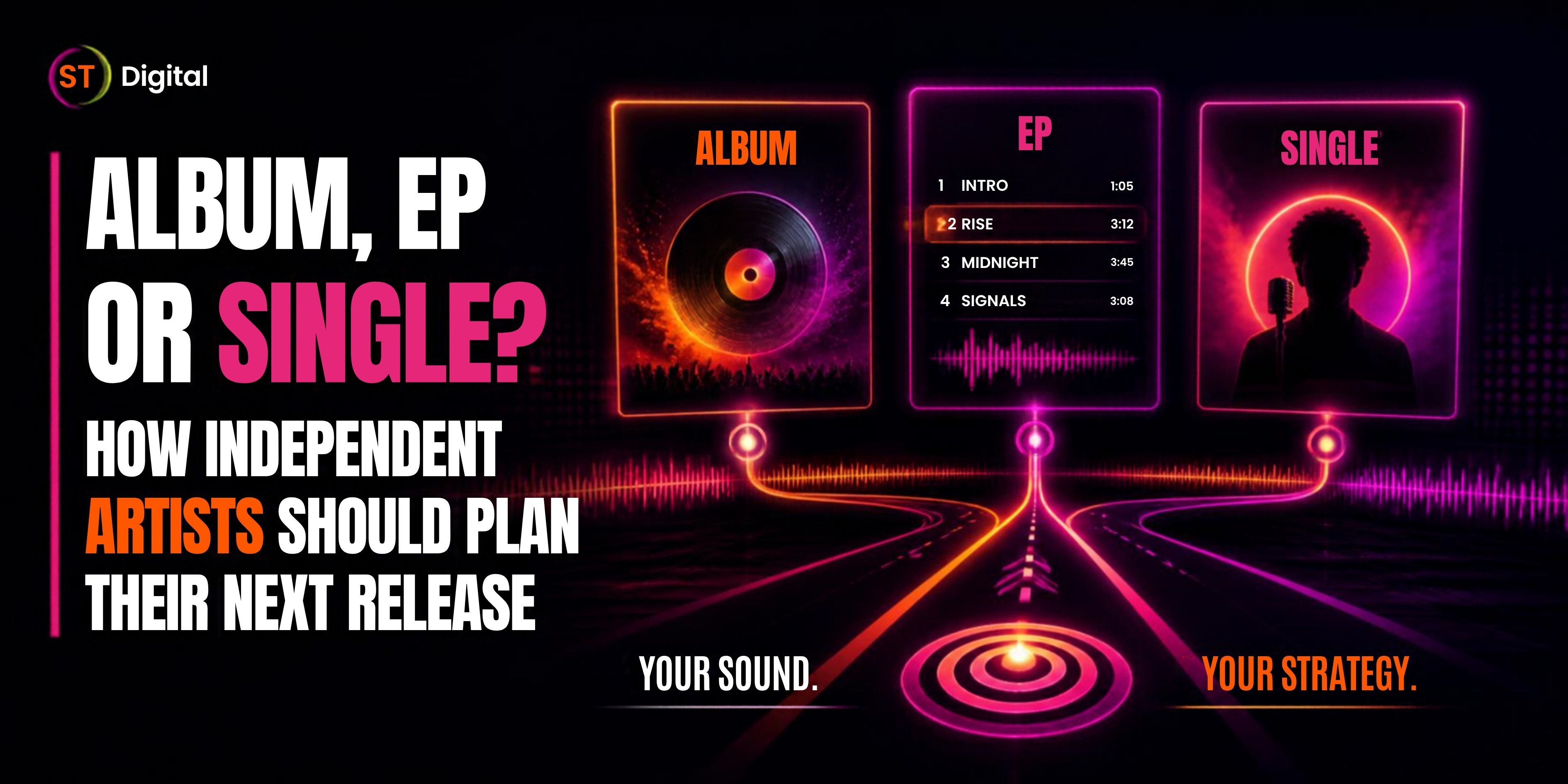
One of the first decisions an artist needs to make is simple but important: Album, EP or Single?
Each release format has its own advantages. The right choice depends on your goals, audience, music catalogue, budget and promotional strategy.
In this guide, we’ll explain the differences between an album, EP and single and help independent artists decide which format makes the most sense for their next release.
Album, EP or Single: What’s the Difference?
Before planning your next release, it is important to understand what each format means.
What Is a Single?
A single is generally one main song released as an individual track. Artists may also release different versions, such as an instrumental, acoustic or remix version.
Singles are one of the most accessible formats for independent artists because they allow you to consistently release new music without waiting to complete a larger project.
A single can be a good choice when you want to:
Introduce yourself to a new audience
Test a new sound or genre
Build momentum between larger projects
Maintain regular activity on streaming platforms
Focus your marketing budget on one song
For emerging artists, singles can provide an opportunity to learn what resonates with their listeners before investing in a larger release.
What Is an EP?
An EP, or Extended Play, sits between a single and a full-length album. It usually contains several tracks that can work together as a smaller musical project.
An EP can be useful when you have multiple songs that share a theme, sound or creative direction but aren't ready to develop a full album.
Artists may choose an EP to:
Showcase several songs
Establish a particular musical identity
Tell a short creative story
Give existing listeners more content
Build anticipation for a future album
An EP can also help an independent artist demonstrate consistency and versatility without the time and financial commitment of producing a full-length album.
What Is an Album?
An album is a larger collection of songs designed to represent a complete body of work.
For many artists, an album is more than a collection of individual tracks. It can communicate a particular story, concept, emotion or stage of their career.
An album may be the right option when you have:
A strong collection of finished songs
A clear creative direction
An established audience
Enough resources for promotion
A long-term storytelling objective
However, creating an album requires considerable planning. Recording, artwork, distribution, marketing and promotion can all require significantly more resources than a single release.
How Should Independent Artists Choose Their Release Format?
There is no universal answer to Album, EP or Single? The best format depends on what you are trying to achieve.
1. Consider Your Career Stage
If you're a new independent artist, releasing a single may be a practical way to introduce your music to listeners.
Instead of releasing ten songs at once, you can release individual tracks over time and use each release as an opportunity to build your audience.
Once you have developed a stronger listener base, an EP or album can provide a larger platform to showcase your work.
2. Think About Your Music Catalogue
Look at the songs you currently have.
Do they work independently, or do they belong together as a project?
If you have one particularly strong track, a single may make sense.
If you have four or five songs that share a sound or theme, an EP could be a better fit.
If you have a substantial collection of connected songs, you may want to consider an album.
3. Define Your Release Goal
Your release format should support a specific objective.
For example:
Goal: Reach new listeners
A single can give you a focused track to promote across social media and streaming platforms.
Goal: Showcase a new sound
An EP can give listeners a broader understanding of your musical direction.
Goal: Tell a complete story
An album can provide the space required to develop a deeper concept.
4. Consider Your Promotion Budget
Music distribution is only one part of a successful release.
You also need to consider promotional activities such as:
A larger project means more content to promote. Make sure your promotional resources match the scale of your release.
Why Singles Can Be Useful for Independent Artists
One of the biggest advantages of singles is flexibility.
Instead of spending months preparing an entire album, an artist can release a song, promote it, study audience response and use those insights when planning future releases.
A consistent release strategy can also help artists maintain communication with their audience.
For example, an artist could plan:
Single 1 → Single 2 → Single 3 → EP
This approach allows the artist to build anticipation while gradually introducing the larger project.
When Should You Release an EP?
An EP can be a strong middle ground for artists who have more than one song ready but aren't prepared to release a full album.
For example, an artist might create a five-track EP around a common theme such as:
Love and relationships
Personal growth
City life
Cultural identity
A specific musical style
The key is to make the tracks feel connected while ensuring that each song can still attract listeners independently.
When Does an Album Make Sense?
An album requires a bigger commitment, but it can also become an important part of an artist's identity.
Before releasing an album, ask yourself:
Do I have enough strong songs?
Do the songs work together as a project?
Do I have a clear concept?
Can I promote the project effectively?
Do I have enough visual content?
Can I support the release beyond launch day?
If the answer to most of these questions is yes, an album could be worth considering.
Don't Forget Music Distribution
Once you've decided between an album, EP or single, the next step is getting your music delivered to digital platforms.
Independent artists can use music distribution services to deliver their releases to streaming and digital music platforms.
A reliable distribution partner can help artists manage the delivery of audio content, metadata and other release information across multiple digital platforms.
Before submitting your music, make sure your:
Audio files meet the required specifications
Cover artwork follows platform guidelines
Artist name is consistent
Song titles are correct
Composer and songwriter information is accurate
Release date is correct
Copyright information is complete
Small metadata mistakes can create unnecessary problems after release.
Build a Release Strategy, Not Just a Release Date
A common mistake independent artists make is focusing only on the day their music goes live.
A successful release should have a plan before, during and after launch.
Before Release
Build anticipation through:
On Release Day
Make the release easy to discover.
Share streaming links, publish promotional content and encourage your existing audience to listen and share.
After Release
Don't stop promoting the song after the first few days.
Continue creating:
A single song can generate weeks or even months of content when promoted creatively.
Track Your Performance
Your release strategy should evolve based on data.
Pay attention to metrics such as:
Streams
Listeners
Saves
Playlist additions
Audience locations
Repeat listeners
Social media engagement
Video views
These insights can help you understand what your audience responds to and influence your next release.
For example, if one song performs significantly better than others, you can use that information when deciding what type of music and content to release next.
Album, EP or Single? A Simple Decision Guide
Your SituationFormat to ConsiderYou're introducing yourself as an artistSingleYou have one strong track readySingleYou want to experiment with a new soundSingleYou have 3–6 connected songsEPYou want to showcase a specific themeEPYou have a large collection of connected songsAlbumYou want to tell a complete musical storyAlbum
These are strategic considerations rather than strict rules. Artists can experiment with different release formats depending on their creative goals and audience.
Final Thoughts
So, Album, EP or Single?
The answer depends on your music, career stage, audience and goals.
For many independent artists, starting with singles can provide a flexible way to build an audience and understand listener preferences. An EP can help establish a stronger artistic identity, while an album can provide the space to present a complete creative vision.
Whatever format you choose, focus on more than simply uploading your music. Plan the release, prepare your promotional content, make sure your metadata is accurate and use performance data to improve your next project.
With the right music distribution strategy and consistent promotion, every release can become another step toward building a sustainable independent music career.
Ready to Distribute Your Next Release?
Whether you're preparing a single, EP or album, having the right distribution partner can help you take your music to digital platforms and reach listeners around the world.
Explore ST Digital's Music Distribution services and start planning your next release.
Frequently Asked Questions (FAQs)
1. 1. Should an independent artist release a single, EP or album?
The right format depends on your goals, music catalogue, audience and resources. A single is useful for testing new music, an EP can showcase a collection of connected songs, while an album works well for a larger creative project.
2. 2. How many songs are usually in an EP?
An EP generally contains several tracks and is shorter than a full album. The exact number can vary depending on the artist, platform and release strategy.
3. 3. Is releasing singles better for new artists?
Singles can be a practical starting point for new artists because they allow you to release music consistently, promote individual tracks and learn more about your audience.
4. 4. When should an artist release an album?
An artist may consider an album when they have a strong collection of songs, a clear creative concept and sufficient time and resources for promotion.
5. 5. What is the difference between an album and an EP?
An album is generally a larger body of musical work, while an EP is a shorter project containing fewer tracks. An EP can be useful for introducing a particular sound or theme without committing to a full album.
6. 6. Can I release singles before releasing an EP or album?
Yes. Releasing singles before a larger project can help build anticipation, introduce individual songs to listeners and create promotional content ahead of the EP or album.
7. 7. How can independent artists distribute their music?
Independent artists can use a music distribution service to deliver their songs to digital streaming and music platforms. ST Digital provides music distribution services for independent artists and labels.
8. 8. What should I prepare before distributing a song?
Artists should prepare high-quality audio, cover artwork, accurate song and artist information, songwriter/composer details, copyright information and the planned release date before submitting music for distribution.
9. 9. How early should I plan a music release?
It is better to plan a release several weeks in advance so you have enough time for distribution, promotional content, pre-release campaigns and other marketing activities.
10. 10. How can I promote my new single, EP or album?
Artists can promote releases through social media, short-form videos, music videos, influencer collaborations, playlist pitching, digital advertising, behind-the-scenes content and consistent post-release promotion.

 October 7, 2026