For independent artists, releasing a song is only the beginning. Once a track reaches Spotify, Apple Music, YouTube Music, JioSaavn, caller-tune services and other digital platforms, it can potentially generate revenue through multiple channels.
Understanding music royalties in India is important for artists, composers, lyricists, producers and labels because different uses of music can involve different rights, agreements and payment systems.
In this guide, we'll explain how streaming royalties, CRBT revenue and other digital music revenue work, what artists should know before distributing their music, and how professional music distribution can help create a path from music release to royalty collection.
What Are Music Royalties?
Music royalties are payments generated when copyrighted music is used commercially.
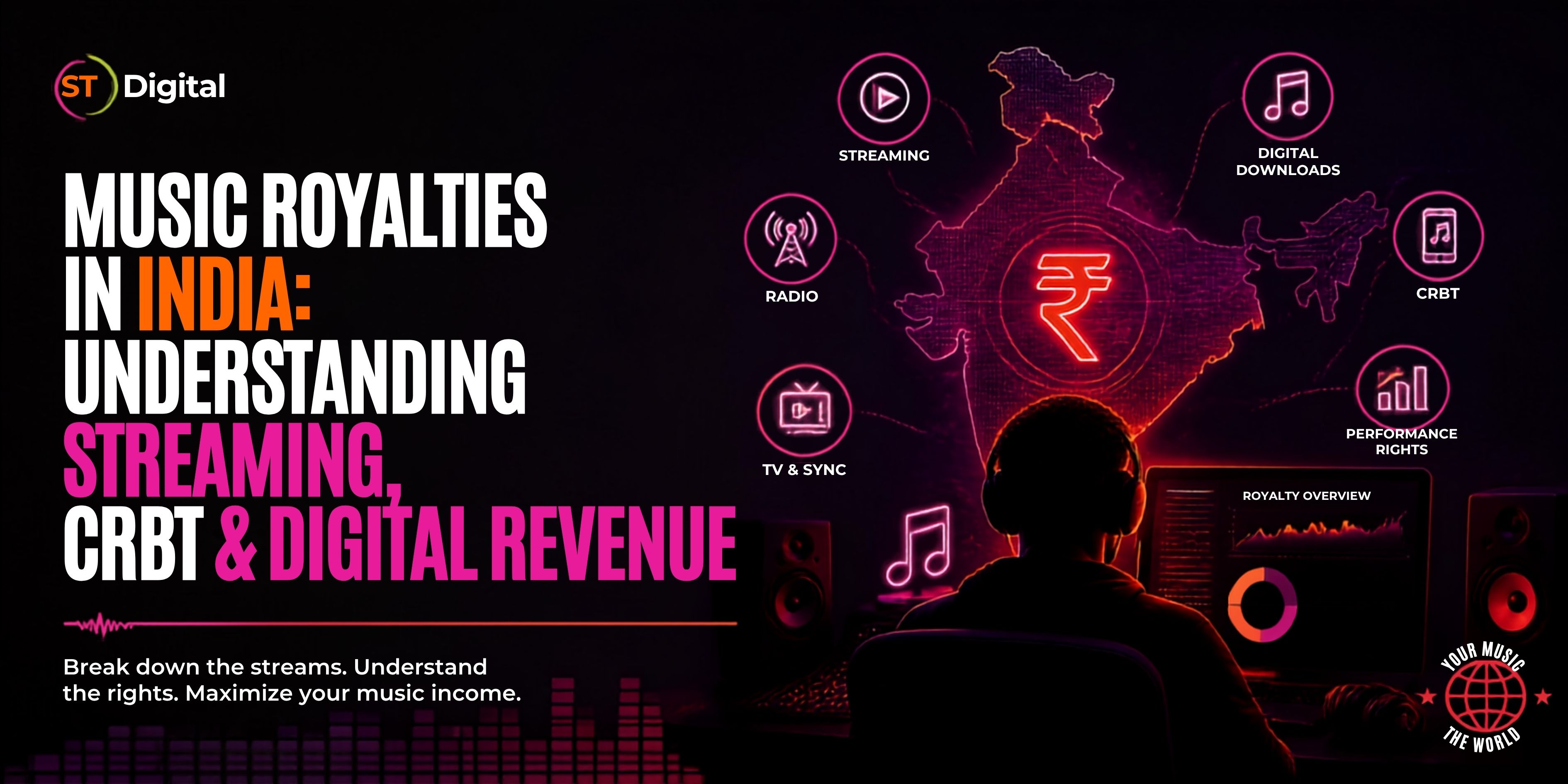
Depending on the rights you own and how your music is used, potential revenue sources can include:
Music streaming
Digital downloads
YouTube monetization
Social-media music usage
CRBT or caller tunes
Publishing royalties
Performance royalties
Licensing
Synchronization
Other digital uses
A single song can therefore generate revenue from more than one source.
However, there is no universal royalty rate that applies to every platform or every artist.
Understanding the Two Main Rights in a Song
Before discussing royalties, artists should understand that a song can contain different types of rights.
Sound Recording Rights
The sound recording, commonly called the master, is the specific recorded version of the song.
For example, when an artist records a new Punjabi, Hindi or Rajasthani track, that particular recording is the master recording.
Composition Rights
The composition is the underlying musical work, including elements such as lyrics and melody.
If you wrote the lyrics or composed the music, you may have rights in the composition in addition to rights in the sound recording.
This distinction matters because revenue connected to the master and revenue connected to the composition may be handled differently.
How Streaming Royalties Work in India
Streaming is one of the most important digital revenue channels for modern artists.
When a listener plays a song on a service such as Spotify, Apple Music or YouTube Music, the platform generates revenue through subscriptions, advertising and other commercial models.
The revenue is then distributed according to the platform's licensing arrangements and applicable rights.
There is no single fixed amount paid for every stream.
The effective value of a stream can vary depending on factors such as:
Platform
Listener's country
Subscription type
Advertising revenue
Total platform revenue
Rights ownership
Licensing agreements
Distributor arrangements
Therefore, artists should be cautious about claims that one stream always equals a specific rupee amount.
How Streaming Revenue Reaches Artists
A simplified model looks like this:
Listener → Streaming Platform → Rights Holder / Distributor → Artist
For example:
An artist uploads a song through a digital distributor.
The distributor delivers the track to supported platforms.
Listeners stream the song.
Platforms report usage and applicable revenue.
The distributor or rights holder receives the relevant revenue.
The artist receives the amount applicable under their agreement.
ST Digital states that artists can upload their music, have it distributed across leading channels and receive payments when their music is streamed on supported platforms.
Does Every Stream Pay the Same?
No.
One of the biggest misconceptions about music royalties is that every stream has an identical value.
The amount generated can differ according to the platform, territory, subscription model and applicable rights arrangements.
For example, a stream from one market may not generate exactly the same amount as a stream from another market.
This is why artists should focus on building genuine listeners and a diversified audience, rather than calculating income using one universal per-stream figure.
What Is CRBT Revenue?
CRBT stands for Caller Ring Back Tone.
It refers to music selected by a mobile subscriber so that callers hear the selected audio while waiting for the call to connect.
For Indian artists, CRBT can provide another potential way to monetize music.
ST Digital lists Callertune Distribution Services as part of its digital distribution offering and describes the service as enabling artists to distribute their tunes across supported platforms.
This can be particularly relevant for music with memorable hooks, devotional songs and popular regional tracks.
CRBT vs Streaming Revenue
Although both can generate digital music revenue, CRBT and streaming are different forms of music usage.
Streaming
A listener actively plays your track through a streaming service.
CRBT
A mobile user selects a song or portion of a song as their caller tune.
The commercial arrangements, reporting and payment mechanisms can therefore be different.
Artists should check which rights and services are covered by their distributor agreement instead of assuming that every form of music usage is automatically monetized.
Why CRBT Can Matter for Indian Artists
India has a large mobile audience, making caller-tune distribution another potentially valuable part of a digital music strategy.
A catchy chorus from a Hindi, Punjabi, Rajasthani, Haryanvi or Bhojpuri song can potentially work well as a caller tune.
Instead of relying on one revenue channel, artists can build a broader strategy around:
Streaming + CRBT + YouTube + Social Platforms + Licensing
The availability of each revenue channel depends on the rights owned, services selected and applicable agreements.
What Is Digital Music Revenue?
Digital music revenue is broader than streaming alone.
Depending on the rights and platforms involved, artists may generate revenue from:
ST Digital's digital distribution services include music, video, lyrics and caller-tune distribution. Its platform also lists a broad range of digital services and stores, including Spotify, Apple Music, YouTube Music, Amazon Music, Deezer, Gaana, JioSaavn, TikTok and others.
This gives artists more opportunities to make their music available across different digital environments.
YouTube and Digital Music Monetization
YouTube can create additional opportunities for music monetization.
An artist may earn from eligible uses of their official videos, while rights-management systems can also help identify certain uses of copyrighted recordings.
However, YouTube revenue should not be confused with traditional streaming royalties.
Different types of YouTube usage can involve different rights and monetization arrangements.
Artists should therefore understand what their distributor or rights-management partner is actually collecting on their behalf.
Publishing Royalties: Why Songwriters Should Pay Attention
Artists sometimes focus entirely on the master recording and overlook the underlying composition.
If you are a songwriter or composer, you may have separate rights in the musical composition.
Publishing-related royalties can involve rights such as:
The organization or service responsible for collecting these rights can differ from the company distributing your sound recording.
If you both own the master and wrote the composition, understanding both sides of the rights structure becomes especially important.
Mechanical and Performance Royalties
Royalty terminology can be confusing, especially for new artists.
Mechanical Royalties
These generally relate to certain reproductions of the underlying musical composition.
Performance Royalties
These can relate to certain public performances or communications of musical works.
The exact rights involved depend on the use of the music and applicable law, licensing and agreements.
Artists should therefore avoid assuming that their distributor automatically collects every possible royalty associated with their song.
What Does a Music Distributor Do?
A professional music distributor helps deliver sound recordings to digital platforms.
Depending on the service, a distributor may provide:
ST Digital describes its platform as allowing artists to distribute music globally, manage rights and monitor royalty payments and analytics.
Its distribution system also allows users to upload recordings, edit releases, view monthly sales and download statements.
How Much Can an Artist Earn From Music Royalties?
There is no fixed answer.
An artist's earnings can depend on:
For this reason, artists should avoid relying on generic online calculators that promise an exact royalty amount.
The better approach is to monitor actual revenue reports and understand the agreement governing your music.
Example: How One Song Can Generate Multiple Revenue Streams
Imagine an independent artist releases a new Punjabi song.
The same song could potentially generate revenue through:
Spotify / Apple Music / JioSaavn
→ Streaming revenue
YouTube
→ Eligible video and content monetization
CRBT
→ Caller-tune revenue
Composition
→ Applicable publishing or performance royalties
Film / Advertisement
→ Licensing or synchronization revenue
Social Platforms
→ Eligible music usage and monetization
Not every song will generate revenue from every channel, but the example shows why artists should think beyond a single streaming platform.
Why Metadata Matters for Royalties
Metadata is more than information displayed alongside your song.
It can help identify the recording, artist, contributors and rights information.
Important metadata can include:
Artist name
Song title
Composer
Lyricist
Featured artist
Producer
ISRC
Language
Genre
Release date
Copyright information
Incorrect metadata can lead to confusion and may make rights administration more difficult.
Before submitting your release, carefully check every credit.
How to Maximize Your Music Revenue in India
1. Use Professional Music Distribution
Choose a reliable music distribution service that can deliver your music to relevant digital platforms.
ST Digital says it distributes music to more than 150 stores worldwide and supports formats including singles, EPs, albums and pre-orders.
2. Understand What You Own
Know whether you own:
Master recording rights
Composition rights
Publishing rights
Other applicable rights
3. Keep Metadata Accurate
Use consistent artist names and accurate contributor information.
4. Explore Multiple Revenue Channels
Don't depend entirely on one streaming service.
Depending on your rights and eligibility, explore:
Streaming
CRBT
YouTube
Social platforms
Licensing
Publishing
5. Monitor Your Revenue Reports
Check your statements regularly.
ST Digital's distribution agreement states that revenue reports are made available through its digital distribution system as reports are received from platforms.
6. Promote Your Music
Distribution makes music available, but promotion helps people discover it.
Use:
Instagram Reels
YouTube Shorts
Music videos
Creator collaborations
Live performances
Playlist promotion
Regional content
7. Build a Long-Term Catalogue
One song can perform well, but a catalogue gives listeners more music to discover.
Consistent releases can help artists build an audience over time.
Common Music Royalty Mistakes
Mistake 1: Focusing Only on Streaming
Streaming is important, but it is not the only potential source of digital music revenue.
Mistake 2: Assuming Every Stream Has the Same Value
Royalty value can vary based on platform, territory, subscription type and rights arrangements.
Mistake 3: Ignoring Composition Rights
Songwriters and composers can have rights separate from the master recording.
Mistake 4: Incorrect Metadata
Incorrect credits or identifiers can make rights administration more difficult.
Mistake 5: Not Reading the Distribution Agreement
Before signing a distribution agreement, understand:
Rights granted
Territory
Term
Revenue share
Deductions
Reporting
Termination provisions
Content requirements
ST Digital's current distribution agreement defines the territory as worldwide and sets out how net revenue and reporting are handled. Artists should always review the current agreement applicable to their account before relying on specific commercial terms.
Mistake 6: Buying Fake Streams
Artificial streams can create serious problems for artists and may violate platform policies.
Focus on genuine listeners, real promotion and long-term audience growth.
How ST Digital Helps Artists With Digital Music Revenue
ST Digital provides music distribution services that allow independent artists and labels to distribute their music across a broad network of digital platforms.
ST Digital states that it has more than 150 stores worldwide and distributes singles, EPs, albums and pre-orders.
Its distribution platform includes major services such as Apple Music, Spotify, YouTube, TikTok, Amazon Music, Deezer, Pandora and other digital platforms.
The platform also highlights advanced rights management, royalty payments and data analytics, giving artists tools to monitor how their music is being used and how it performs across platforms.
For artists looking for broader digital monetization opportunities, ST Digital also offers digital distribution services covering music, videos, lyrics and caller tunes.
Final Thoughts
Understanding music royalties in India is just as important as creating and releasing music.
A single song can potentially generate revenue from multiple sources, including:
Streaming + CRBT + YouTube + Digital Platforms + Publishing + Licensing
However, each revenue stream can involve different rights, agreements and collection mechanisms.
The smartest approach is to understand what you own, maintain accurate metadata, use professional song distribution, monitor your royalty reports and explore legitimate monetization opportunities available for your music.
For independent artists, music distribution is not simply about putting a song online. It is about creating a path from music creation to audience reach, rights management and revenue.
Frequently Asked Questions (FAQs)
1. What are music royalties in India?
Music royalties are payments generated from eligible uses of copyrighted music, including streaming, downloads, caller tunes, licensing and certain public or digital uses.
2. How do artists earn royalties from streaming platforms?
Streaming platforms generate revenue through subscriptions, advertising and other models. Revenue is allocated according to their licensing and royalty arrangements, with eligible amounts ultimately reaching rights holders and artists through the applicable distribution or rights-management system.
3. Does every stream have the same value?
No. The effective value can vary according to platform, territory, subscription type, revenue pool and rights arrangements.
4. What does CRBT mean in music?
CRBT means Caller Ring Back Tone. It allows mobile users to select music that callers hear while waiting for a call to connect.
5. Can one song generate multiple types of royalties?
Yes. Depending on ownership, licensing and usage, a song can potentially generate streaming, CRBT, YouTube, publishing, performance, licensing and other revenue.
6. Does a music distributor collect every type of royalty?
Not necessarily. A distributor generally handles the rights and revenue streams covered by its agreement and services. Publishing and certain other rights may involve separate collection arrangements.
7. How can independent artists increase their music revenue?
Artists can use professional distribution, maintain accurate metadata, build genuine audiences, release music consistently, understand their rights and explore multiple legitimate monetization channels.
8. Can regional artists earn royalties from international listeners?
Yes. When music is distributed internationally and used on supported platforms, artists may generate revenue from listeners in different countries, subject to platform terms and applicable rights arrangements.
9. Why is music distribution important for royalty collection?
A distributor can help deliver music to digital platforms and provide reporting for revenue generated through covered services. ST Digital provides global distribution and royalty-related tools through its platform.

 October 7, 2026