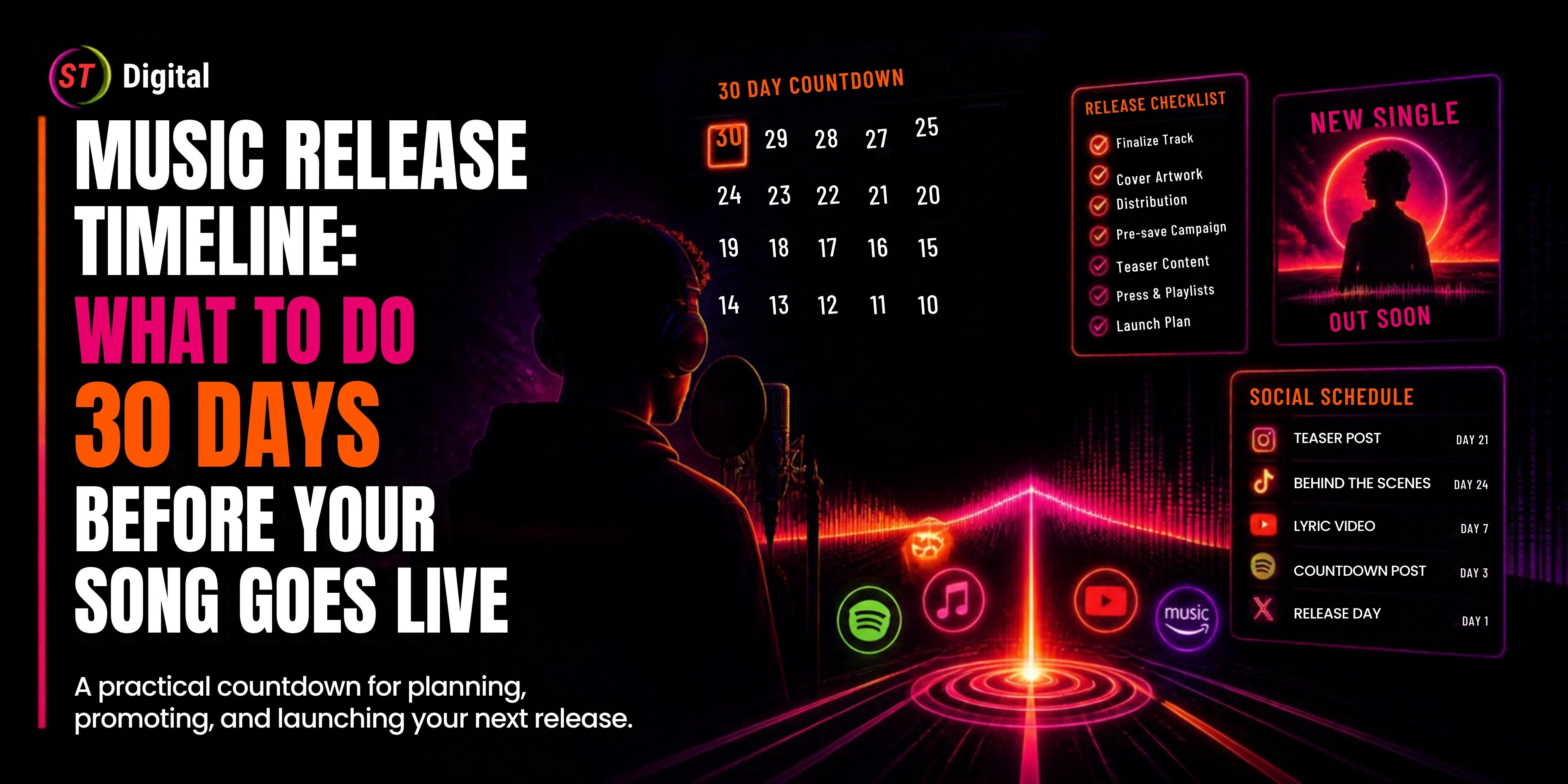
Releasing a song is more than uploading an audio file and waiting for it to appear on streaming platforms. For independent artists, a well-planned music release timeline can help create anticipation, avoid last-minute mistakes and give your song a better chance of reaching the right audience.
The 30 days before your song goes live are especially important. This is when you should finalize your music, prepare your artwork and metadata, plan your promotional content and make sure your distribution is ready.
Whether you're releasing your first single or adding another track to your catalogue, this 30-day release checklist can help you stay organized.
Why Do You Need a Music Release Timeline?
Without a timeline, artists often leave important tasks until the last minute.
A planned release schedule gives you enough time to:
Prepare your final audio
Check artwork and metadata
Submit your music for distribution
Plan social media content
Build anticipation
Prepare promotional assets
Coordinate collaborations
Track your release after launch
Instead of treating release day as the starting point, think of it as the final stage of a campaign that begins weeks earlier.
30 Days Before Release: Finalize Your Song
At around 30 days before release, your song should be close to its final version.
Make sure the following are ready:
Listen to the final master carefully on different devices, including headphones, speakers and your phone.
This is also a good time to confirm that everyone involved in the song has approved the final version.
27–28 Days Before Release: Prepare Your Cover Artwork
Your cover artwork is one of the first things listeners will see.
Create artwork that represents the mood and identity of your song while following the requirements of the digital platforms where you plan to distribute it.
Before submitting your artwork, check:
Correct dimensions and format
Artist name spelling
Song title spelling
No unnecessary promotional information
No misleading platform logos
Clear and professional design
Your artwork should also work well at smaller sizes because listeners may see it as a small thumbnail on streaming platforms.
25–26 Days Before Release: Finalize Your Metadata
Metadata may not be the most exciting part of releasing music, but it is extremely important.
Your metadata can include:
Song title
Artist name
Featured artists
Album or EP name
Genre
Language
Songwriter information
Composer information
Publisher information
ISRC, where applicable
Release date
Double-check every detail before submission.
A small spelling mistake in an artist name or song title can create confusion and may require corrections later.
23–24 Days Before Release: Submit Your Music for Distribution
Once your audio, artwork and metadata are ready, it's time to submit your release to a music distribution service.
Music distribution helps deliver your release to digital music platforms so listeners can discover and stream your song.
When submitting your release, carefully review the information before confirming.
Check:
Audio → Artwork → Metadata → Credits → Release Date → Artist Information
Don't wait until the last few days to submit your music. Giving yourself additional time allows you to address potential issues before the planned release date.
21 Days Before Release: Start Building Anticipation
Once your release is scheduled, start talking about it.
You don't need to reveal everything immediately.
You can create anticipation through:
"Coming Soon" posts
Short song teasers
Studio footage
Behind-the-scenes clips
Artwork previews
Countdown posts
Short-form videos
The goal is to give your audience a reason to look forward to the release.
18–20 Days Before Release: Plan Your Social Media Content
Don't rely on a single post on release day.
Prepare multiple pieces of content that can be distributed before and after the launch.
For example:
Pre-release
Announcement post
Cover reveal
Teaser reel
Behind-the-scenes video
Countdown story
Release day
Post-release
Preparing this content in advance makes the release period much easier to manage.
15–17 Days Before Release: Prepare Your Promotional Assets
Your promotional assets should match the platforms where your audience spends time.
Consider preparing:
Instagram Reels
YouTube Shorts
Facebook posts
Instagram Stories
YouTube thumbnails
Artist banners
Lyric videos
Promotional graphics
Press images
Create multiple variations instead of using exactly the same creative everywhere.
For example, a vertical video can be optimized for Reels and Shorts, while a square graphic may work better for certain social posts.
14 Days Before Release: Begin Your Pre-Release Campaign
Two weeks before launch, your audience should know that something is coming.
You can introduce:
What: Your new song
When: Release date
Why: The story or inspiration behind it
Where: The platforms where listeners can find it
Keep your messaging consistent across your social channels.
If a pre-save or pre-release campaign is available for your release, this is also a good stage to encourage your audience to participate.
10–13 Days Before Release: Pitch and Outreach
Use this period to reach out to relevant people and communities.
Depending on your music and audience, this could include:
Music bloggers
Playlist curators
Influencers
Content creators
Radio platforms
Music publications
Industry contacts
Existing collaborators
Keep your outreach personalized.
Instead of sending the same generic message to everyone, explain why your release may be relevant to them.
7–9 Days Before Release: Increase Your Content Frequency
You are now entering the final week.
Start increasing your communication without overwhelming your audience.
You could publish:
A simple countdown can work well:
7 DAYS TO GO
5 DAYS TO GO
3 DAYS TO GO
TOMORROW
This creates a clear sense of progression toward launch day.
5–6 Days Before Release: Check Everything Again
This is your final quality-control stage.
Review:
If something is incorrect, identify it now rather than on release day.
3–4 Days Before Release: Prepare Your Release-Day Plan
Don't wait until the song goes live to decide what you're going to post.
Create a simple release-day schedule.
For example:
Morning: Release announcement
Afternoon: Short-form video
Evening: Artist message or performance clip
Night: Reminder + audience engagement
You can adjust the schedule according to your audience and platform analytics.
1 Day Before Release: Final Countdown
The day before release is about reminding your audience without revealing too much.
You can post:
"Tomorrow."
Follow it with your song artwork, release date and a simple call to action.
Make sure all your release-day assets are ready.
Release Day: Your Song Is Live
The big day has arrived.
Once your song is available, check the streaming platforms and make sure the release appears correctly.
Then start communicating with your audience.
Share:
Most importantly, respond to your listeners.
Like comments, answer questions and share genuine audience reactions where appropriate.
Don't Stop After Release Day
One of the biggest mistakes artists make is treating release day as the end of promotion.
It should actually be the beginning of the next phase.
Your song can continue generating content for weeks.
Try creating:
The more creative ways you find to present the song, the more opportunities you create for people to discover it.
Simple 30-Day Music Release Timeline
TimeKey Activity30 DaysFinalize song and credits27–28 DaysPrepare cover artwork25–26 DaysFinalize metadata23–24 DaysSubmit for music distribution21 DaysStart building anticipation18–20 DaysPlan social media content15–17 DaysPrepare promotional assets14 DaysStart pre-release campaign10–13 DaysBegin outreach and pitching7–9 DaysIncrease content frequency5–6 DaysFinal quality check3–4 DaysPrepare release-day schedule1 DayFinal countdownRelease DayLaunch and promoteAfter ReleaseContinue promotion and analyze performance
Final Thoughts
A successful music release doesn't happen by accident. It starts with planning.
Following a music release timeline gives independent artists enough time to prepare their music, artwork, metadata, distribution and promotional campaign without unnecessary last-minute pressure.
The most important thing is to start early. Finalize your music, submit your release in advance, prepare your promotional content and keep engaging with your audience after the song goes live.
Whether you're releasing a single, EP or album, a structured release strategy can make the entire process more organized.
When you're ready to distribute your next release, explore ST Digital's Music Distribution and prepare your music for digital platforms.
Frequently Asked Questions (FAQs)
1. 1. How early should I plan my music release?
Ideally, start planning your release at least 30 days before the launch date. This gives you enough time to finalize the song, artwork, metadata, distribution and promotional campaign.
2. 2. What should I do 30 days before releasing a song?
Thirty days before release, finalize your mastered audio, song credits, artwork and metadata. You should also decide on your release date and begin preparing your distribution and promotion strategy.
3. 3. When should I submit my song for music distribution?
It is recommended to submit your song to your music distribution service well before the release date. This provides time to address metadata, artwork or delivery issues before your planned launch.
4. 4. What metadata do I need for a music release?
Common metadata includes the song title, artist name, featured artists, album or EP name, genre, language, songwriter and composer information, publisher details, ISRC where applicable and release date.
5. 5. How important is cover artwork for a music release?
Cover artwork is an important part of your release because it represents your song visually across digital platforms. Make sure it meets the required technical specifications and accurately represents your music.
6. 6. When should I start promoting my song?
You can start building anticipation around 2–3 weeks before release. Teasers, artwork reveals, behind-the-scenes content, countdowns and short-form videos can help introduce the upcoming release to your audience.
7. 7. What should I post on social media before releasing a song?
Artists can share song teasers, studio footage, artwork previews, lyrics snippets, behind-the-scenes content, countdown posts and stories about the inspiration behind the song.
8. 8. Should I promote my song after it is released?
Yes. Release day should not be the end of your campaign. Continue promoting the song with Reels, Shorts, lyric videos, live performances, acoustic versions, behind-the-scenes content and other creative formats.
9. 9. What should I check before my song goes live?
Before release, verify your audio, song title, artist name, featured artists, artwork, songwriter credits, metadata, release date and distribution status. Also make sure your promotional content and release-day links are ready.
10. 10. Can independent artists distribute their music online?
Yes. Independent artists can use digital music distribution services to deliver their music to streaming and digital platforms. ST Digital offers music distribution services for independent artists and labels.

 October 18, 2026