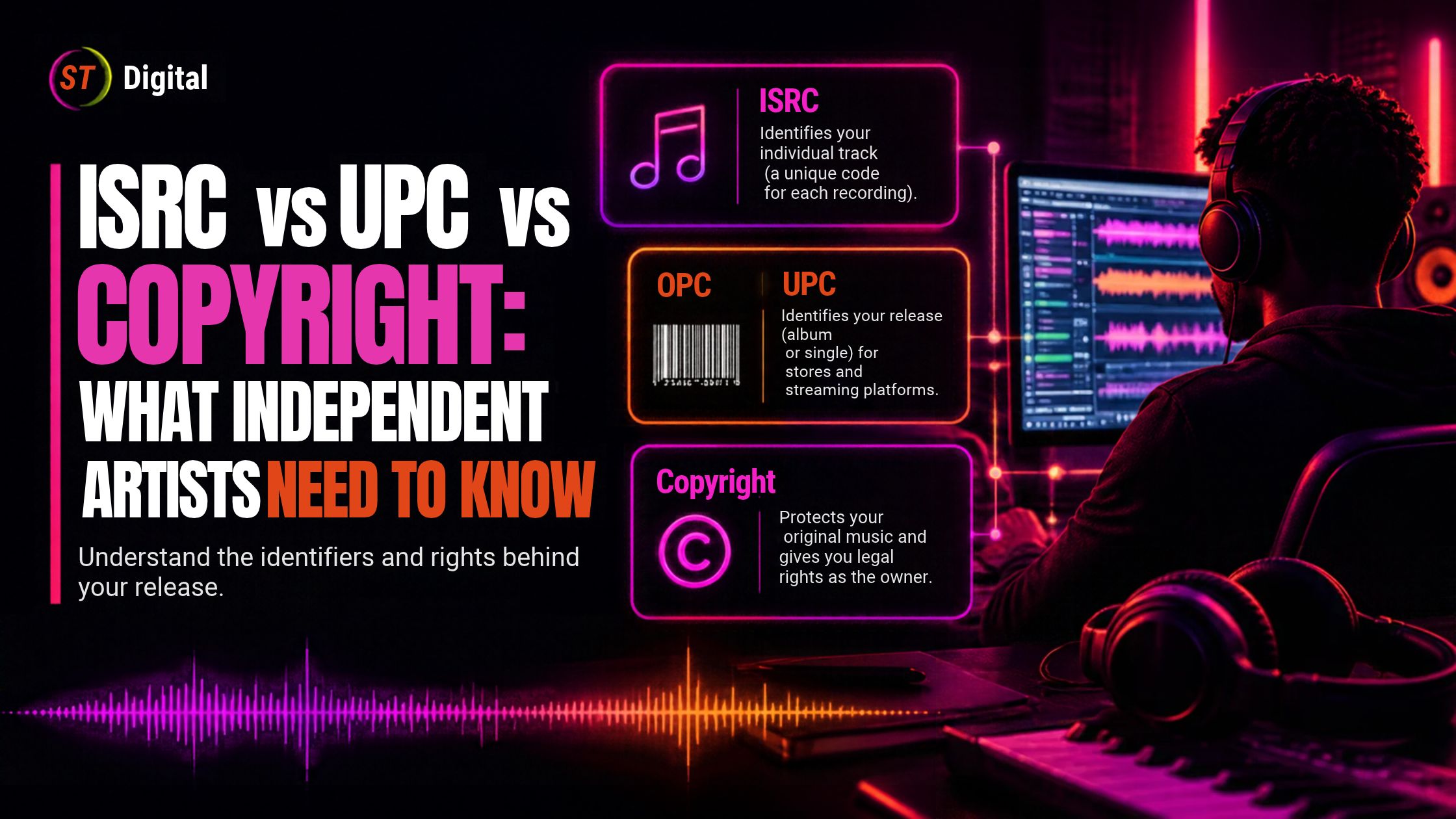
ISRC vs UPC vs Copyright: What Independent Artists Need to Know
 November 25, 2026
When releasing music digitally, independent artists often come across three important terms: ISRC, UPC and Copyright. These terms may appear during music distri...
 November 25, 2026
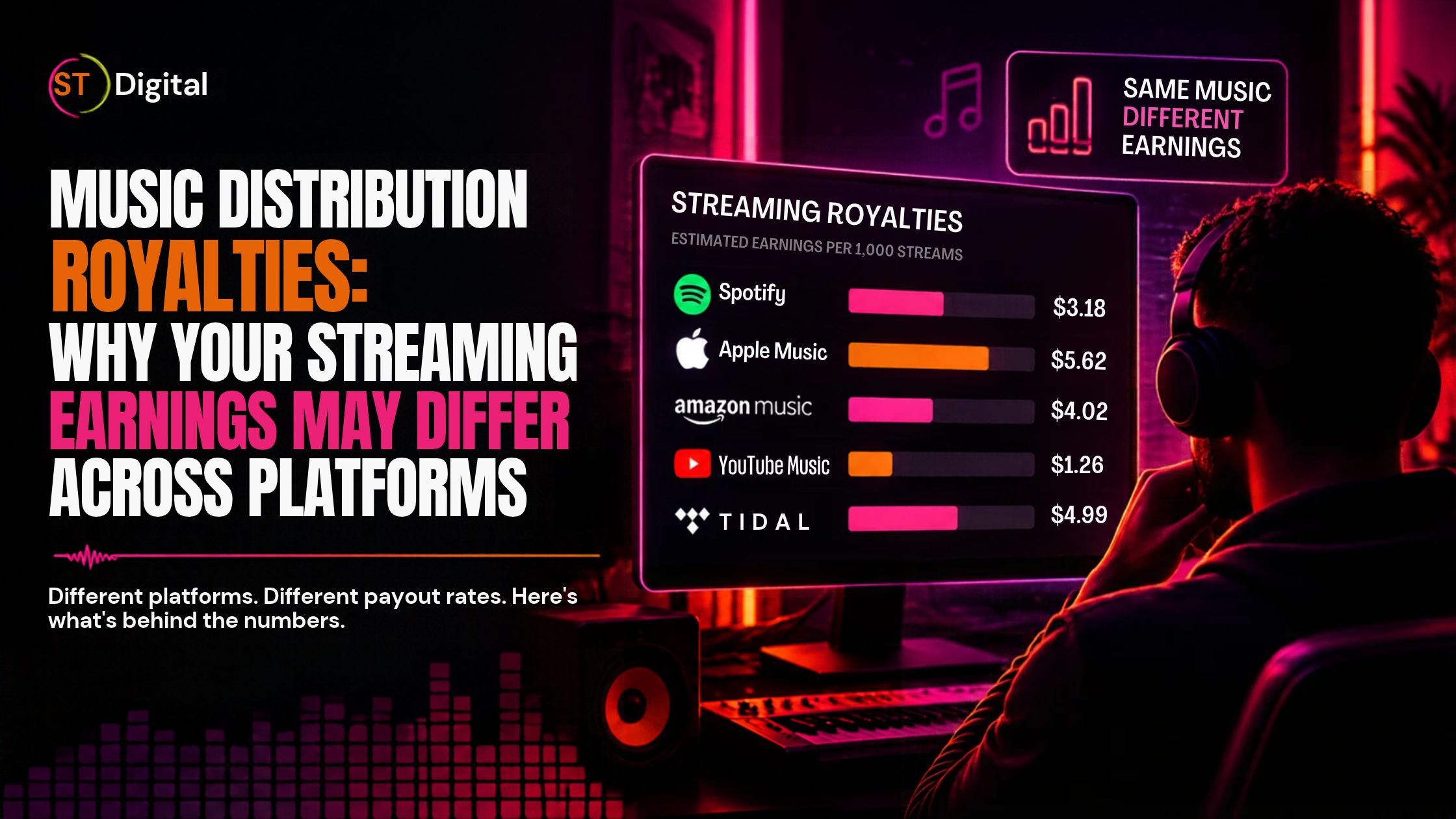
Have you ever noticed that the same song can generate different royalty earnings on Spotify, Apple Music, YouTube Music, JioSaavn and other streaming platforms—even when the number of streams appears similar?
This is a common question among independent artists and music labels. Many musicians assume that every streaming platform pays a fixed amount per stream. However, music distribution royalties do not work that way.
The amount generated by your music can depend on the platform's revenue model, listener location, subscription type, total streaming activity, licensing agreements and the rights involved.
Even after a streaming platform calculates the royalties, the final amount received by an artist may change because of distributor fees, label agreements, publishing arrangements, taxes and currency conversion.
In this guide, we explain why music distribution royalties differ across platforms, how streaming earnings are calculated, what affects your payments and how independent artists can better understand their royalty statements.
Music distribution royalties are earnings generated when a recording is made available and consumed through digital music platforms under applicable licensing agreements.
When an artist releases a song through a music distributor, the distributor delivers the recording to supported streaming services.
When listeners play that music, the platform calculates the applicable revenue and pays the relevant rights holders according to its agreements.
The distributor or label then reports and pays the artist according to their contract.
Common digital music platforms include:
Spotify
Apple Music
YouTube Music
Amazon Music
JioSaavn
Deezer
Other supported streaming services
Important: Streaming platforms generally do not pay artists a universal fixed amount for every stream. The amount associated with a stream is an effective average calculated after revenue and usage are known.
There is no single reason why one platform may generate more revenue than another.
Different platforms have different business models, subscription plans, listener behaviour and licensing arrangements.
Let's understand the major factors.
One of the biggest reasons streaming royalties vary is that platforms generate revenue differently.
Some services primarily earn money through paid subscriptions, while others also generate revenue through advertising.
For example:
Premium subscriptions generate recurring subscription revenue.
Free listening tiers may generate advertising revenue.
Family and student plans may have different subscription prices.
Promotional offers may affect the revenue generated per subscriber.
The revenue available for music royalties can therefore vary between services and subscription types.
Spotify explains that its royalty calculations are based on streamshare rather than a fixed per-stream payment. Its royalty pool is funded by subscription and advertising revenue. https://artists.spotify.com/en/royalties-guide
The country where a listener streams your music can significantly affect the revenue generated.
Streaming subscription prices, advertising markets, taxes, local purchasing power and licensing arrangements differ across countries.
For example, a song receiving streams from India may generate a different effective royalty amount from the same song receiving streams from the United States or the United Kingdom.
This does not mean that every stream from a particular country has one guaranteed value.
The actual amount depends on the platform's revenue and royalty arrangements for that territory and reporting period.
Why this matters for Indian independent artists:
If your music attracts listeners in multiple countries, your royalty statements may show different earnings across territories—even when the number of streams is similar.
Not all listeners generate the same amount of revenue for a streaming service.
A Premium subscriber pays for access to the platform, while a free-tier listener may generate revenue through advertisements.
Because subscription and advertising revenue work differently, the royalty pool associated with these listening categories can differ.
For example:
A Premium listener contributes subscription revenue.
A free-tier listener contributes advertising-supported revenue.
Family and student subscriptions may have different pricing structures.
Spotify's official royalty guide explains that Premium and Free listening contribute differently to the available royalty pool. https://artists.spotify.com/en/royalties-guide
The total number of streams across a platform also affects the effective average amount associated with each stream.
Many major streaming services use a model commonly described as pro-rata or streamshare-based distribution.
Under this approach, a rights holder's share of the relevant royalty pool depends on its share of eligible streams during a particular period and market.
A simplified example:
Imagine a platform has a royalty pool of ₹10,00,000 for a particular market and reporting period.
If a rights holder accounts for 1% of eligible streams, its share of that pool would be ₹10,000 before any further contractual distribution or deductions.
This is a simplified illustration, not an actual platform payout calculation.
Spotify describes this approach through its streamshare model: an artist's or rights holder's share of streams is compared with total streams in the relevant market. https://loudandclear.byspotify.com/faq/
Streaming services negotiate licensing agreements with record labels, distributors, publishers and other rights holders.
These agreements determine how relevant rights are licensed and how royalties are calculated and paid.
Factors can include:
Recording royalty arrangements.
Publishing royalty arrangements.
Revenue-based terms.
Minimum guarantees or other contractual provisions.
Territory-specific licensing terms.
Applicable deductions and adjustments.
This is another reason why two streaming services may report different earnings for similar listening activity.
A song can involve more than one type of copyright and royalty.
Two important categories are:
These relate to the sound recording, commonly called the master recording.
The recording revenue is generally paid to the relevant recording rights holder through its label, distributor or licensing arrangement.
These relate to the underlying musical composition and lyrics.
They may be collected and distributed through publishers, performing rights organizations and other relevant collection arrangements.
Spotify's royalty guide explains these as separate royalty types, with recording royalties flowing through the selected recording licensor and publishing royalties flowing through publishers and relevant rights organizations. https://artists.spotify.com/en/royalties-guide
For Indian artists, it is important to understand that a digital distributor's recording royalty report may not represent every publishing royalty connected to a song.
The amount reported by a streaming service is not necessarily the amount an artist receives.
After the platform pays the relevant rights holder, the artist's final payment depends on the distribution or recording agreement.
For example, an artist may work with:
A distributor charging a service fee.
A distributor retaining an agreed percentage.
A record label operating under a royalty-sharing agreement.
A partner providing additional promotional or administrative services.
The artist's earnings may also be affected by collaboration splits, recoupment, contractual deductions and other applicable terms.
Before choosing a music distributor, understand how it calculates and reports your share.
Artists distributing music internationally may receive royalty statements in different currencies or through different payment schedules.
The amount credited to their bank account can be affected by:
Currency conversion rates.
Applicable taxes and withholding.
Payment processing charges.
Minimum payout thresholds.
Distributor payment schedules.
Reporting and accounting delays.
For example, streaming revenue generated in another country may be converted into the currency used for the distributor's royalty statement or payment.
The conversion date and applicable fees can influence the final amount received.
Let's consider a simplified example.
An independent artist receives 100,000 streams on three streaming platforms.
PlatformStreamsIllustrative earningsPlatform A100,000₹8,000Platform B100,000₹5,500Platform C100,000₹3,500
<text color="secondary" size="xs">These figures are hypothetical examples for explaining the concept. They are not actual rates or verified payouts from Spotify, Apple Music, YouTube Music or any other service.</text>
Why might the earnings differ?
The platforms may have different revenue pools.
Their listeners may have different subscription mixes.
Streams may come from different countries.
Their licensing agreements may differ.
The reporting periods may not match.
The figures may represent different rights or deductions.
The lesson is simple: equal stream counts do not guarantee equal royalty earnings.
A simplified way to understand a streamshare-based royalty model is:
Rights holder's estimated share = Relevant royalty pool × Rights holder's share of eligible streams
For example:
Relevant royalty pool: ₹10,00,000
Rights holder's share of eligible streams: 2%
Illustrative royalty allocation: ₹20,000
This amount represents an example of a rights-holder allocation, not necessarily the artist's final payment.
The artist's actual earnings may depend on their agreement with the label or distributor, as well as any applicable fees, deductions and revenue splits.
Different platforms may use different contractual and accounting arrangements, so this simplified formula should not be treated as a universal calculation method.
Many websites publish estimated streaming payout rates for different platforms.
These figures can be useful as broad comparisons, but they should not be treated as guaranteed payments.
A so-called per-stream rate is often calculated by dividing reported royalties by the number of streams.
For example:
Average payout per stream = Total reported royalties ÷ Total reported streams
This is an average, not necessarily the actual payment for every individual stream.
The result can change depending on:
The country of listening.
Subscription and advertising revenue.
Total streams in the reporting period.
The rights included in the report.
The reporting period and accounting adjustments.
Spotify also explains why average per-stream comparisons can be misleading: the effective average depends partly on how much users stream on the service, not simply on a fixed payment for each play. https://loudandclear.byspotify.com/faqs/why-does-the-per-stream-rate-appear-lower-for-spotify-than-some-other-streaming-services/
Artists should therefore focus on their actual royalty statements rather than relying only on online payout estimates.
If you want to understand which platform generates more revenue for your music, compare the information carefully.
Here are practical steps.
Use the same month or reporting period for every platform.
Comparing January earnings from one service with a full quarter from another can produce misleading results.
Use the same recording and verify its ISRC.
This helps ensure you are comparing the same version rather than a remix, alternate recording or duplicate release.
Compare the stream counts reported by each platform.
Also check whether the reports use the same definitions of eligible streams and reporting periods.
Review the country breakdown wherever available.
A difference in audience geography can help explain why earnings differ.
Review your distributor or label agreement.
Confirm:
Your royalty share.
Service fees or commissions.
Any additional deductions.
Payment thresholds.
Currency conversion terms.
Reporting and payment schedules.
Do not assume that every royalty statement includes both recording and publishing revenue.
Check which rights and income categories are covered in each report.
There is no guaranteed way to earn a fixed amount from every stream. However, artists can take practical steps to build a stronger music distribution strategy.
A well-planned release schedule can help artists build an active catalog and give listeners more opportunities to discover their music.
Focus on quality, audience relevance and a realistic release plan.
Promote your music to listeners in different countries through suitable marketing channels.
Use audience insights to understand where your listeners are located and which markets are responding to your releases.
Ensure your releases have accurate:
Song titles.
Artist names.
Featured artist credits.
Composer and lyricist information.
ISRC codes.
UPC/EAN identifiers.
Release dates.
Accurate metadata supports catalog management and royalty reporting.
Do not rely on a single streaming service.
Build an audience across the platforms where your listeners prefer to discover and consume music.
Use official artist profiles, social media, music videos and other suitable promotional channels.
Check your statements regularly.
Look for changes in streams, territories, reported revenue, deductions and payment status.
If you notice a major discrepancy, contact your distributor with the relevant release and reporting details.
Choose a distributor based on more than a headline royalty percentage.
Review its platform coverage, reporting quality, payment terms, support, rights administration and contract conditions.
A royalty statement can provide useful information about your music's performance and earnings.
Depending on the distributor and reporting format, check for:
Statement detailWhy it mattersStreaming platformIdentifies the service reporting the usageTrack titleHelps identify the recordingISRCHelps match the specific sound recordingReporting periodShows when the streams occurredTerritoryIdentifies the listener marketStream countShows reported usageGross or reported revenueIndicates the amount reported before applicable deductionsDistributor feeShows the service charge or commission, if applicableNet payableShows the amount payable under the agreementPayment statusHelps track whether the amount has been paid
Not every distributor provides every field. Ask for clarification if the report does not explain how your earnings were calculated.
For independent artists, choosing a music distributor is an important part of releasing music and managing recording revenue.
ST Digital offers music distribution services for independent artists and music labels looking to deliver their recordings to supported digital platforms.
Before selecting a distribution service, artists should review:
Supported streaming platforms.
Royalty-sharing terms.
Reporting and payment policies.
Applicable charges and deductions.
Rights and licensing conditions.
Metadata requirements.
Additional services such as caller tune distribution.
Explore ST Digital's music distribution services to understand the current offering.
Artists can also explore ST Digital's caller tune distribution service for another potential music distribution channel.
For a broader understanding of how music income works, read our guide to music royalties in India.
Music distribution royalties can differ significantly across streaming platforms, even when the same song receives a similar number of streams.
The reason is that streaming earnings depend on much more than stream counts. Platform revenue, subscription types, listener locations, licensing arrangements, rights ownership and distributor agreements all play a role.
Independent artists should not rely only on estimated per-stream rates. Instead, they should understand their royalty statements, compare equivalent reporting periods, review their distribution agreements and monitor their music catalog.
Your goal should be to build a genuine audience, understand your music rights and choose a distribution partner with clear reporting and payment terms.
Ready to distribute your music? Explore ST Digital's music distribution services.
Royalties can differ because of platform revenue, subscription plans, advertising income, listener locations, licensing agreements, total streams and the rights involved.
There is no universal fixed per-stream rate for either service. The effective average depends on the revenue pool, usage, territories and relevant licensing arrangements.
No. Many major services calculate royalties using revenue-based or streamshare-based models rather than a universal fixed payment for every stream.
Different countries have different subscription prices, advertising markets, taxes, listener behaviour and licensing arrangements. These differences can affect royalty calculations.
Premium subscriptions generally contribute subscription revenue, while free-tier listening is supported by advertising. The available royalty pools can therefore differ.
In many distribution arrangements, the distributor or relevant recording rights holder receives recording revenue from the platform and pays the artist according to the distribution agreement.
Possible reasons include listener geography, subscription mix, reporting delays, distributor fees, royalty splits, taxes, currency conversion and the type of rights included in the statement.
Not necessarily. Recording royalties and publishing royalties are separate categories. Whether publishing income is included depends on the platform's reporting and the relevant collection or administration arrangements.
Review your distributor's royalty dashboard or statements. Where available, check platform, track, ISRC, reporting period, territory, stream count and reported revenue.
No. One million streams does not guarantee a particular payment. Earnings depend on the platform, territory, revenue model, licensing terms and rights-holder agreements.
Yes. Independent artists can release music through digital distributors and receive recording revenue according to their distribution agreements.
November 25, 2026When releasing music digitally, independent artists often come across three important terms: ISRC, UPC and Copyright. These terms may appear during music distri...
 November 16, 2026
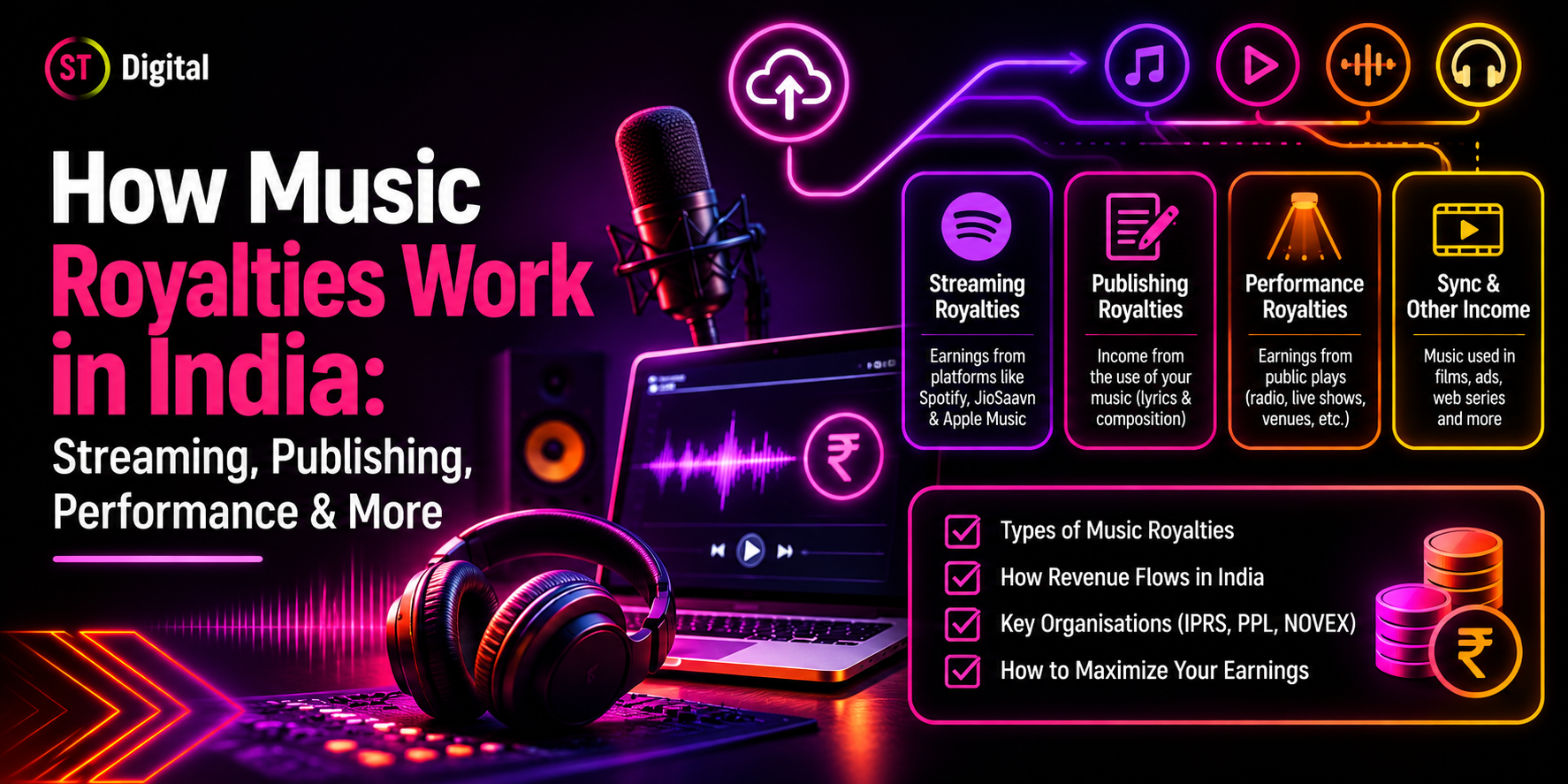
Making music is an art, but understanding how that music generates income is an important part of building a sustainable career. Whether you are a singer, songw...
 November 16, 2026
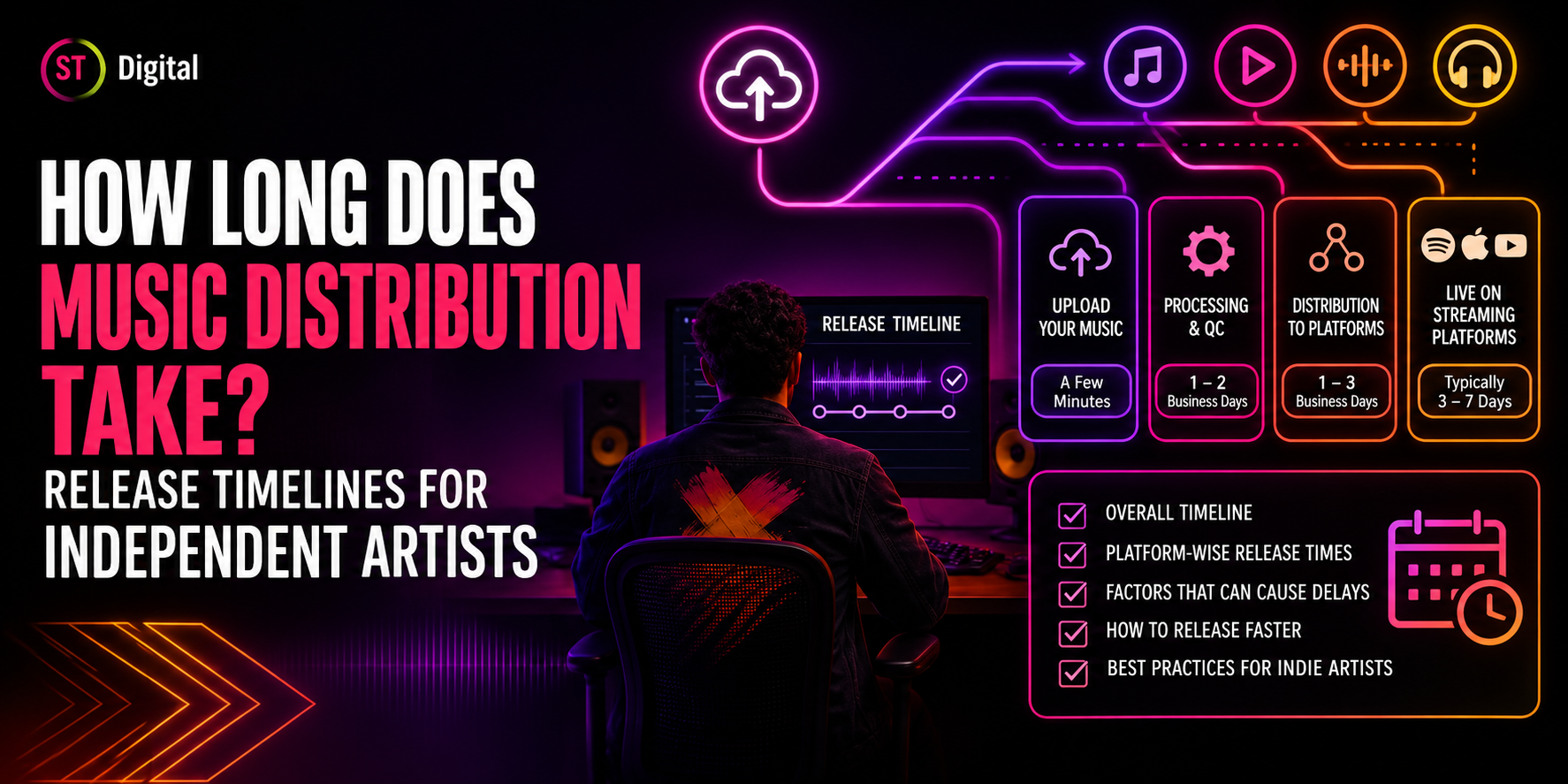
Releasing a song is an exciting milestone for every independent artist. After recording, mixing and mastering your music, the next step is getting it onto popul...