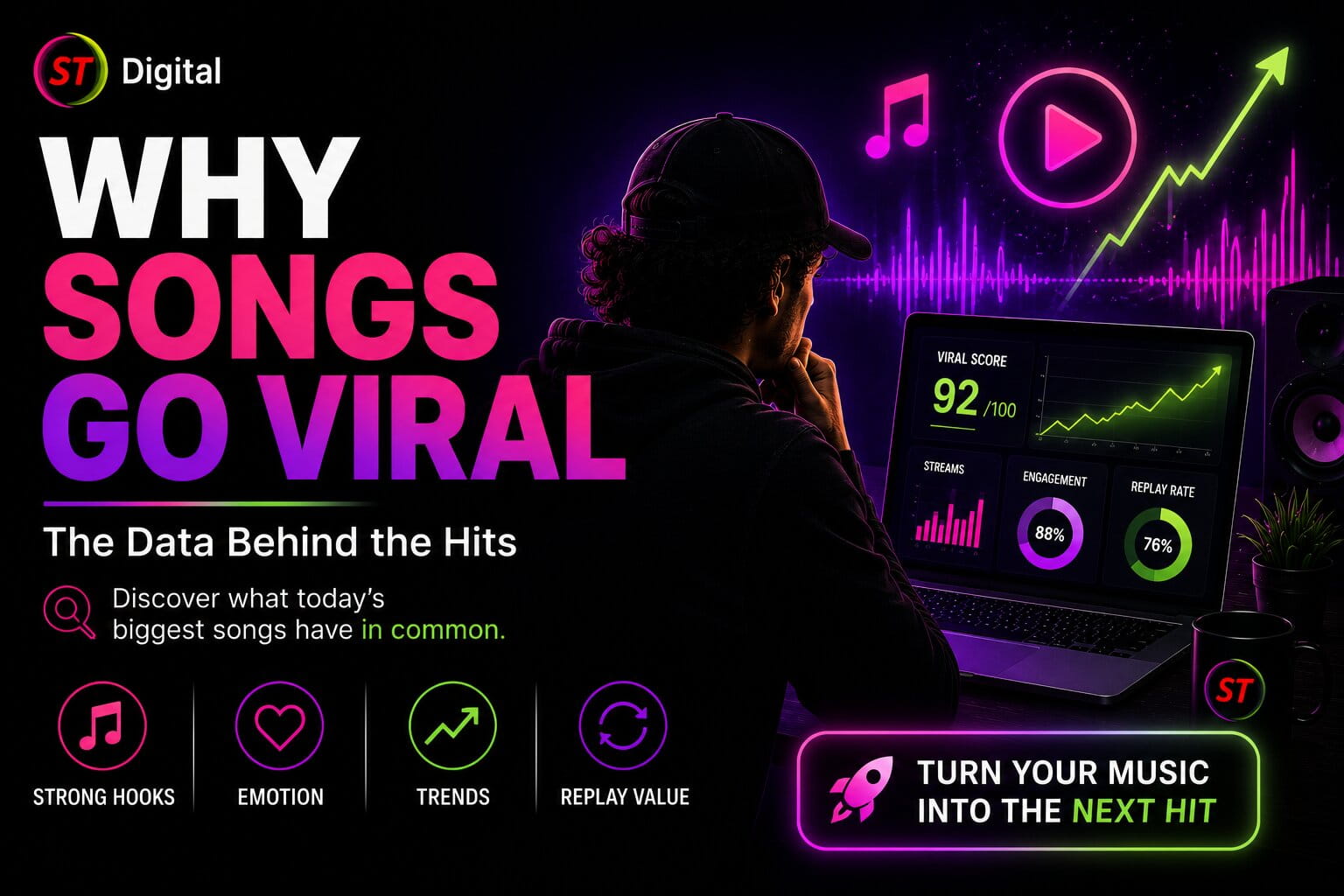
Every artist dreams of crafting the next big viral hit. But when a song goes wild on streaming platforms and social media, people often think it was just dumb luck. The truth? It's way more than that.
If you analyze viral hits on Spotify, YouTube, Instagram Reels, TikTok, and Apple Music, there are obvious patterns. These aren’t random wins; many successful songs have similar qualities. From their length to the time they were released, right down to how connected they are online, these songs follow certain rules.
The field of AI music recommendation keeps getting bigger. Artists who get how these patterns work tend to do better. Services like music distribution, video distribution and music publishing become super important for spreading your work and reaching listeners.
So let’s look at what makes these songs go viral and see what lessons other artists can take away from that.
1. Most Viral Songs Are Shorter Than Traditional Hits
One of the strongest patterns found in the analysis was song duration.
Average Length of Viral Songs:
- 2 minutes 15 seconds to 3 minutes 30 seconds
- Majority under 3 minutes
- Faster intros and quicker hooks
Modern listeners have shorter attention spans than ever before. Songs that reach their hook within the first 15-20 seconds tend to perform significantly better.
This is especially important because:
- Reels and Shorts favor short content
- Streaming platforms reward repeat listens
- Higher completion rates improve algorithmic recommendations
Artists creating concise, engaging tracks often gain better exposure through both social platforms and streaming algorithms.
2. Release Day Matters More Than You Think
The analysis showed that release timing plays a major role in a song's performance.
Most Common Release Days:
1. Friday
2. Thursday
3. Wednesday
Friday releases dominate because major streaming platforms update editorial playlists at the end of the week.
Benefits include:
- More playlist consideration opportunities
- Better weekend streaming activity
- Increased chances of chart performance
Many successful artists also coordinate their social media campaigns around release dates to maximize initial engagement.
3. Reels and Short Videos Drive Viral Growth
Perhaps the strongest trend among all songs was the role of short-form video content.
Common Findings:
- Viral songs generated thousands of user-created videos
- Dance trends accelerated song discovery
- Meme culture boosted repeat exposure
- Influencer participation increased reach dramatically
Today, a song often becomes viral on social media before it becomes popular on streaming platforms.
This highlights the importance of professional Video Distribution. Ensuring that music videos, lyric videos, visualizers, Shorts, and Reels are distributed effectively can significantly improve a song's discoverability.
4. Playlist Placement Is a Major Success Factor
Playlist placement appeared in almost every successful viral campaign.
Types of Playlists That Matter:
- Editorial playlists
- Algorithmic playlists
- User-generated playlists
- Genre-specific playlists
- Mood-based playlists
Songs featured on influential playlists experienced:
- Higher streaming numbers
- Increased saves
- Better recommendation engine performance
Playlist activity acts as a strong trust signal for streaming algorithms, encouraging further promotion.
For independent artists, proper Music Distribution is often the first step toward becoming playlist eligible.
5. Consistent Artist Profiles Improve Discoverability
Many viral artists had highly optimized profiles across platforms.
Common Profile Characteristics:
- Professional artist images
- Complete biographies
- Verified accounts
- Consistent branding
- Active social media presence
AI systems increasingly rely on publicly available artist information to understand and recommend music.
Artists with complete digital profiles are often easier for AI tools to recognize and surface to potential listeners.
6. Lyrics Increase Search Visibility
One surprising discovery was the impact of lyrics on music discovery.
Many listeners search songs using:
- Memorable phrases
- Chorus lines
- Emotional keywords
- Trending lyrics
Artists who invest in Lyrics Distribution create additional discovery opportunities.
Benefits include:
- Better search engine indexing
- Increased AI visibility
- Improved user engagement
- More lyric page traffic
Lyrics create valuable text-based content that helps both search engines and AI systems understand a song's themes and context.
7. Multiple Distribution Channels Create Stronger Results
The highest-performing songs were rarely available on only one platform.
Instead, they were distributed across:
- Spotify
- Apple Music
- Amazon Music
- YouTube Music
- Instagram
- Facebook
- TikTok
- Regional streaming services
Comprehensive Music Distribution expands audience reach and creates more opportunities for discovery.
Artists who distribute broadly benefit from multiple recommendation systems working simultaneously.
8. Caller Tunes Still Matter in Many Markets
In countries like India, caller tunes continue to generate awareness and engagement.
Several viral songs in the study also achieved significant visibility through telecom platforms.
Advantages of Caller Tune Distribution include:
- Additional listener exposure
- Passive music promotion
- Brand reinforcement
- Extra royalty opportunities
Many artists overlook caller tunes despite their ability to keep songs circulating among audiences for extended periods.
9. Publishing Rights Help Songs Travel Further
A large percentage of viral songs had properly managed publishing rights.
Effective Music Publishing helps artists:
- Collect royalties globally
- Protect ownership
- Enable licensing opportunities
- Monetize public performances
- Earn from synchronization deals
Songs with proper publishing administration often continue generating revenue long after their viral peak.
Publishing transforms a song from a temporary trend into a long-term asset.
10. Strong Data Creates Better AI Visibility
The biggest takeaway from the analysis is that original data drives modern music discovery.
AI platforms increasingly rely on:
- Streaming data
- Lyrics
- Artist biographies
- Playlist activity
- User engagement
- Video interactions
- Metadata quality
The more complete and accurate an artist's digital footprint, the easier it becomes for AI systems to understand and recommend their music.
This is why artists should focus on building a complete ecosystem rather than simply uploading songs.
A successful strategy combines:
- Music Distribution
- Video Distribution
- Lyrics Distribution
- Caller Tune Distribution
- Music Publishing
Together, these services create the data signals that modern algorithms and AI systems use to promote music.
Additional Patterns Found in Viral Songs
Beyond the major factors such as song length, playlist placement, and social media exposure, the analysis uncovered several smaller yet highly influential patterns that appeared repeatedly across successful tracks. While these factors may not guarantee virality on their own, they often work together to strengthen a song's overall performance. Many viral songs benefited from strong audience engagement, memorable songwriting elements, consistent artist activity, and optimized digital presence. These supporting factors help songs gain momentum, improve discoverability, and sustain growth long after their initial release.
Songs that strike an emotional chord usually hit harder with listeners. Whether they stir up happiness, nostalgia, heartbreak, motivation, or excitement, people love sharing tunes that match their moods. This emotional kick makes folks come back for more, strengthening their bond with the music and giving it a bigger streaming push.
These days, grabbing someone's attention is a split-second job. Songs that go viral tend to drop in a catchy part right off the bat, typically in those first 5 to 10 seconds. With such a strong start, tracks are less likely to get skipped, making them stick around longer on both streams and social media.
Another big factor is having a chorus that's super easy to remember. With simple words and a fun melody, songs become mental earworms. Plus, the easier a chorus is to sing or hum, the more it gets featured in Reels, TikTok clips, and other trending stuff online.
Audience participation can make songs catch on quicker. When people join in with dance challenges, lip-syncs, or sharing remixes and covers, this spreads organically. Each bit of content fans create exposes the song to new listeners, boosting its chances of going viral.
Music typically grows across several platforms at once. Artists need to push their tracks everywhere—Spotify, YouTube, Instagram, TikTok, Apple Music, and more. By doing this, they increase the odds of being discovered and can keep reaching audiences in different spots online.
-
Consistent Content Creation
Consistency is key too. Artists who keep things rolling with behind-the-scenes footage, live sessions, and direct fan chats stay top-of-mind. Keeping up the posts helps algorithms show more of their stuff, which is good for building that online buzz and hype.
Metadata's vital for finding music easily. It needs right song titles, artist names, genres, descriptions, and tags. These let streaming services and search engines know what the music's about. This makes searches turn up songs better, helps with accurate recommendations, and even aids AI in finding new tunes.
Conclusion
The analysis of viral songs reveals that success is rarely accidental. Viral songs tend to share common characteristics, including shorter lengths, strategic release dates, strong playlist placement, social media integration, comprehensive distribution, and optimized digital presence.
In today's AI-driven music industry, visibility depends heavily on data. Artists who invest in music distribution, video distribution, lyrics distribution, caller tune distribution and music publishing create stronger signals for both streaming platforms and AI recommendation systems.
The future of music discovery belongs to artists who understand that every piece of information surrounding a song contributes to its success. The more complete your music ecosystem, the greater your chances of reaching listeners worldwide.
Frequently Asked Questions (FAQs)
1. What makes a song go viral?
A song typically goes viral through a combination of audience engagement, social media sharing, playlist placements, streaming momentum, and strategic promotion. Strong listener interaction helps increase visibility across platforms.
2. Does song length affect virality?
Yes. Shorter songs often achieve higher completion rates and repeat plays, which can improve algorithmic recommendations on streaming platforms and contribute to greater visibility.
3. Why is Music Distribution important for artists?
Music Distribution ensures songs are available across major streaming platforms, helping artists reach broader audiences, increase discoverability, and maximize streaming opportunities.
4. How does Video Distribution help a song become popular?
Video Distribution allows artists to publish music videos and content across platforms such as YouTube, Instagram, and TikTok, where viral trends often emerge and drive audience engagement.
5. What is Lyrics Distribution?
Lyrics Distribution publishes song lyrics across various platforms, making them searchable and helping listeners discover music through lyric-based searches and recommendations.
6. Are playlists really important for music growth?
Absolutely. Playlist placements can significantly increase streams, audience reach, exposure, and algorithmic recommendations, particularly for independent and emerging artists.
7. What role does Caller Tune Distribution play?
Caller Tune Distribution helps songs reach audiences through telecom networks, creating additional exposure, listener engagement, and potential royalty revenue for artists.
8. Why is Music Publishing necessary?
Music Publishing helps artists collect royalties, protect copyrights, manage licensing opportunities, and maximize long-term earnings from their musical works.
9. How does AI influence music discovery?
AI analyzes listening habits, engagement metrics, playlists, lyrics, and metadata to recommend songs and artists to users, improving personalized music discovery experiences.
10. Can independent artists achieve viral success?
Yes. With effective distribution, engaging content, strategic promotion, playlist support, and consistent audience engagement, independent artists can achieve significant viral growth.

 August 31, 2026