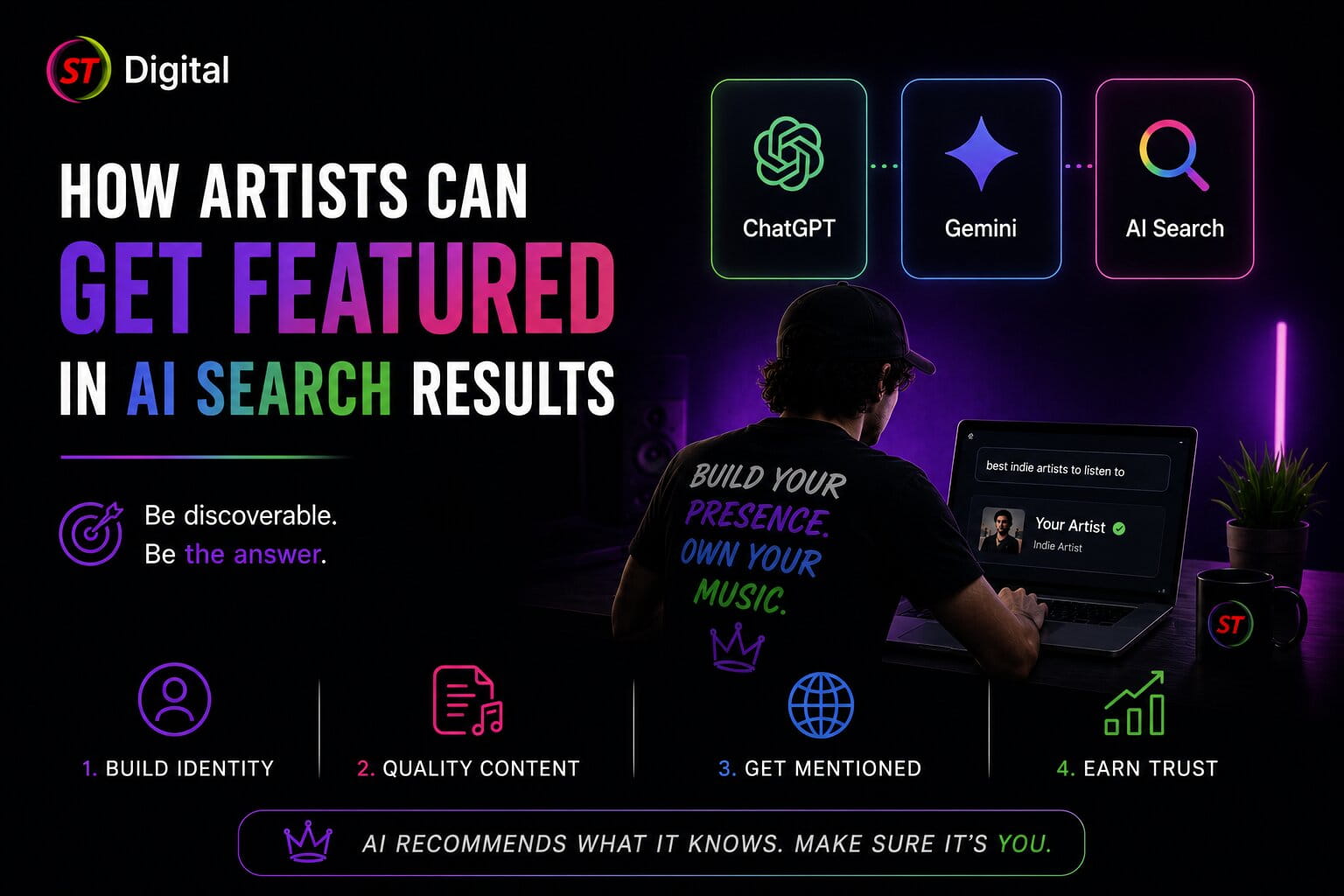
Discovery of music no longer depends upon music platforms and search engines alone. Now, with AI assistants becoming a prominent part of online discovery, it is set to become the new gatekeeper between musicians and listeners. Musicians have been targeting Spotify playlists, YouTube recommendations, Instagram reels, and Google searches to discover more listeners for several years now. However, the emergence of another form of discovery channel is gaining momentum much quicker than musicians can understand—AI Search.
Now, countless users of AI platforms such as ChatGPT, Gemini, Claude, Perplexity, etc., are asking questions like:
- Recommend indie Indian musicians.
- Who are the best emerging rappers in India?
- Suggest underrated pop artists I can discover?
- Some upcoming Punjabi artists to listen to?
In lieu of browsing numerous websites to find these artists, people are turning towards AI-based recommendations. It clearly indicates that musicians should not depend only upon traditional SEO and social media marketing.
The big question is: How can artists improve their chances of being discovered and mentioned by AI systems?
Let's explore the parameters that influence AI visibility and what musicians can do today to build a stronger digital presence.
Why AI Visibility Matters for Artists
AI search will soon become one of the main sources of discovering new information. Unlike standard search engines that give you links, AI systems will offer answers directly.
Asking for artist recommendations means that the AI will select artists to recommend depending on information found on the internet.
Thus, the more visible your music and your personal information about you as an artist are online, the better chances there are that you will be recommended to potential fans.
For independent artists, this creates an exciting opportunity. You no longer need a major label to gain visibility. A strong online footprint can help AI systems understand who you are, what genre you create, and why listeners should discover your music.
How AI Discovers Artists
AI systems do not randomly recommend musicians. They rely on information gathered from multiple trusted sources.
Some common sources include:
The more consistent and trustworthy your online presence is, the easier it becomes for AI systems to identify and recommend you.
Think of AI as a researcher. If information about your music is scattered, incomplete, or inconsistent, it becomes harder for AI to understand your artist persona.
Why Your Spotify Artist Profile Matters More Than Ever
While for numerous artists, Spotify is just an uploading and streaming platform, today, in the era of the internet, your artist profile on Spotify holds a different meaning. Indeed, Spotify artist page becomes a powerful sign which makes it possible for search engines, as well as artificial intelligence, to recognize who you are.
Once users enter your artist name in the search line, your Spotify artist page appears among the results. Thus, the Spotify artist page is a reflection of your brand, sound style, accomplishments, and artistic essence. Not less important, having a perfectly crafted Spotify profile increases your credibility significantly.
While many independent artists invest their time in crafting fantastic music, they do not give enough attention to developing a professional artist profile. The absence of a fully developed profile may lead to misunderstanding from listeners' side even for highly qualified artists.
1. Complete Artist Biography
Your artist biography is more than just a short introduction. It tells your story and helps people understand the person behind the music.
A strong biography should include:
- Your musical journey and background
- The genres you create
- Your inspirations and sources of influence
- Notable achievements and milestones
- Recent releases and future goals
For example, instead of writing:
"I am an independent artist from India who loves creating music."
You could write:
"A fusion of modern hip-hop and local elements, the artist XYZ has been able to establish a fan base for themselves using emotionally charged narratives and creative production techniques. Having entered into the industry in 2023, XYZ has already managed to release several singles which have together accumulated thousands of streams online."
A detailed and engaging biography not only creates a stronger personal connection with listeners but also provides necessary context for search engine algorithms and AI tools to properly understand you as an artist.
2. Professional Artist Images
Visual branding is critical in the perception of artists on social media. Often before someone listens to your music, he or she will see your profile picture, banner, or any promotional material you have shared.
Professional-looking artist pictures give a sense of professionalism and consistency. This is key for making your profile look memorable and aesthetically pleasing.
Tips for choosing artist photos:
- Always use professional photography
- Consistency is important in visuals
- Ensure images reflect your musical identity
- Update photos periodically to match your current brand
For example, an EDM producer may use futuristic visuals and vibrant colors, while an acoustic singer-songwriter may choose a more natural and intimate aesthetic. The goal is to create a visual identity that aligns with your music.
Strong visuals not only attract listeners but also increase the likelihood of being featured in playlists, blogs, articles, and promotional opportunities.
3. Consistent Genre Positioning
One of the biggest mistakes emerging artists make is sending mixed signals about their music.
Your Spotify profile should accurately communicate with people that tells what type of music you create. This helps listeners know what to expect and makes it easier for recommendation systems to categorize your content.
In case you give different descriptions about yourself on Spotify, your social media profiles, biographies, and even in your promotional activities, it creates an inconsistency in branding.
For example, if you primarily create Punjabi hip-hop music, your branding should consistently reflect that identity across all platforms rather than presenting yourself as a pop artist in one place and a rapper in another.
Consistent genre positioning helps:
- Attract the right audience
- Improve recommendation accuracy
- Strengthen brand recognition
- Build a loyal fan base
The clearer your artistic identity, the easier it becomes for both listeners and digital platforms to understand where your music belongs.
4. Regularly Updated Releases
An active Spotify profile signals growth, momentum, and commitment to your career.
While releasing music frequently is not the only factor that matters, maintaining a consistent release schedule can help keep your audience engaged and encourage repeat visits to your profile.
Regular releases might:
- Boost listener engagement
- Generate more streaming activity
- Create additional promotional opportunities
- Improve visibility within recommendation systems
- Encourage more shares and playlist adds
Every new release creates fresh content that can be discovered by new audiences. It also provides opportunities to update your artist profile, share news with fans, and spark conversations about your music.
Artists who remain active are often viewed as more relevant and committed than those who disappear for long periods without updates.
5. Showcase Your Achievements
Your Spotify profile should highlight important milestones whenever possible.
This may include:
- Playlist placements
- Streaming achievements
- Collaborations
- Awards or nominations
- Media features
- Sold-out performances
These accomplishments act as trust signals and demonstrate that your music is gaining traction.
Connect Your Spotify Profile With Your Broader Online Presence
Your Spotify profile should not exist in isolation. It should connect seamlessly with your website, social media accounts, YouTube channel, and other music platforms.
This creates a stronger digital ecosystem around your artist brand and makes it easier for fans to discover more of your content.
The more connected and consistent your online presence is, the stronger your overall visibility becomes.
Why Every Artist Needs a Website
For many artists, social media platforms like Instagram, YouTube, TikTok, and Facebook play an important role in developing a fan base and promoting their music. Although social media helps with building an online presence and getting visibility, you do not have full control over it. Anything from algorithm changes, blocked accounts, or loss of organic reach can affect your chances of being found. If you are solely dependent on social media, then your entire existence as an artist depends on what happens on those platforms.
A personal website provides you with total control over your online presence. This platform becomes your very own corner of the internet where people can find everything about you without any unnecessary distractions. You can share all your accomplishments, news, music, and anything else you want with people who visit your site, thus making a more professional representation of yourself.
Your website will also be the hub of all your information for search engines and artificial intelligence systems. Having all your information in one place helps these technologies learn more about you, the genre of music you make, and your successes. As artificial intelligence music discovery technologies advance, the strength of your website might become an important factor in increasing your presence online and reaching new audiences.
A strong artist website should include:
1. Artist Biography
The artist biography section on your website is one of the key parts that can help your potential audience get to know you not only through your music but through you as a person as well. An effective artist biography should reflect your background, musical influences, your creative path, and the story of how you got into the business. It is also useful for the press, playlist curators, and other industry people that need additional information about you and your songs. The content you write here may be used by search engines and AI algorithms to better understand your artist identity and genre.
2. Discography
Having your discography listed on your website is essential as this way you give your visitors the opportunity to check out your full body of works at once. Your discography should include all of your albums, EPs, singles, collaborative projects, remixes, etc. as well as their release dates and descriptions. It will not only allow your fans to find even more songs but will also help you showcase yourself as a consistent artist.
3. Media Coverage
Having media coverage as part of the information provided on your website will add to the credibility and expertise in the music industry. Media coverage may include interviews, features in magazines, blog posts, podcast interviews, reviews, and press releases. When people visit your site and see that credible media have featured you in their stories, this builds up your credibility. These media sources also serve as important signals that can boost your search engine and AI performance.
4. Contact Information
The inclusion of easy-to-find and clear contact information will make sure that any industry representative, promoter, or other person interested in working with you can find an efficient way of contacting you. Contact pages should be included on your website for booking information, management information, business inquiries, press contacts, and partnership contacts. Having such a page shows that you are serious about your career in music.
5. Embedded Music
The inclusion of your songs directly into your website enables a smooth listening process by your visitors. Rather than making the users navigate away from your website, you give them the privilege to play your songs through such sites as Spotify, Apple Music, YouTube, SoundCloud, and many others without leaving your site. In doing so, they spend more time on your site and get interested in listening to more of your songs.
The Importance of Knowledge Panels
When you search for famous artists on Google, you often see a box containing information such as:
- Artist name
- Biography
- Social profiles
- Songs
- Albums
- Images
This is known as a Knowledge Panel.
Knowledge Panels help establish authority and trust.
Although building a Knowledge Panel takes time, artists can improve their chances by:
- Maintaining consistent information across platforms
- Getting featured on reputable websites
- Building citations across music databases
- Creating a verified online presence
Knowledge Panels help search engines understand artist entities, which can indirectly improve AI visibility.
What Is Music Schema and Why Does It Matter?
Schema markup is structured data added to a website that helps search engines understand content.
For musicians, music schema can communicate information such as:
Schema acts like a translator between your website and search engines.
When implemented correctly, it helps search engines process information more accurately and can improve your digital discoverability.
Build Authority Through Music Blogs and Press Coverage
AI systems tend to trust artists who are discussed by multiple reputable sources.
This is why music PR remains valuable.
Consider getting featured on:
- Music blogs
- Entertainment websites
- Industry publications
- Podcast interviews
- Local news platforms
- Artist spotlight articles
Every mention strengthens your online footprint.
The more credible websites that reference your music, the more signals AI systems receive about your relevance and authority.
Create Content Beyond Music Releases
Many artists only post when releasing new music.
Instead, build an ongoing content ecosystem.
Ideas include:
- Behind-the-scenes content
- Songwriting stories
- Studio sessions
- Artist interviews
- Industry opinions
- Music education content
- Tour updates
This content creates additional digital assets that AI systems can discover and understand.
Maintain Consistent Branding Everywhere
One common mistake artists make is using different names, bios, and descriptions across platforms.
Consistency matters.
Your artist name, bio, images, social handles, and genre descriptions should remain aligned across:
Consistency makes it easier for AI systems to connect all references to a single artist entity.
Focus on Building Digital Authority, Not Just Streams
Streams are important, but authority matters too.
Artists who are regularly mentioned online often become more visible than artists with similar streaming numbers.
Focus on:
- Press coverage
- Industry features
- Collaborations
- Guest appearances
- Interviews
- Speaking opportunities
Authority creates discoverability.
The Future of Music Discovery Is AI-Powered
A new age of music discovery is coming soon.
Rather than going on infinitely scrolling playlists and search results, users are now more likely to turn to their AI-assisted devices for recommendations.
Those musicians that focus on building their digital influence, branding, structure, media coverage, and high-quality online presence will be in a better position to take advantage of this revolution.
Those musicians who get ready for the future now will be at an advantage when it arrives.
Conclusion
This is not a matter of gaming the system; being present on ChatGPT, Gemini, and AI search engines is essential for developing credibility.
Creating a full Spotify profile, building a professional website, organizing your music using music schema, maintaining a cohesive brand, securing coverage, and engaging online can help you become more visible via AI.
In a world where finding information and entertainment through AI search becomes more common, artists who create authority online have a greater chance of being discovered.
Frequently Asked Questions (FAQs)
1. Is it possible for an artist to personally send a profile to ChatGPT?
Artists cannot directly submit profiles to AI platforms like ChatGPT. These systems gather information from publicly available sources such as artist websites, streaming platforms, media coverage, interviews, and online databases.
2. Does having a Spotify page benefit your AI visibility?
Yes. An optimized Spotify profile can improve AI visibility by providing detailed artist information, updated releases, and consistent branding that help AI systems better understand your music and identity.
3. What is artist SEO?
Artist SEO refers to the process of optimizing your online presence so search engines and AI platforms can easily discover, understand, and recommend your music and artist brand.
4. Why is an artist website crucial in 2026?
An artist website acts as the central source of information about your music career. It gives you control over your brand, showcases your achievements, and provides AI systems with accurate and trustworthy information.
5. What is a music schema?
Music schema is a form of structured data added to a website that helps search engines understand information about artists, songs, albums, release dates, and other music-related content.
6. Can independent artists be suggested by AI?
Yes. Independent artists can appear in AI recommendations if they maintain a strong digital presence, consistent branding, accurate online information, and credible mentions across multiple platforms.
7. How does a Knowledge Panel benefit musicians?
A Knowledge Panel provides a summary of important artist information, including music, biography, images, and social profiles. It helps build credibility and improves how search engines understand your artist identity.
8. Does media attention play any role in AI visibility?
Yes. Mentions from reputable websites, blogs, magazines, and media outlets strengthen your digital authority and increase the likelihood of AI systems recognizing and recommending your artist profile.
9. How crucial is consistent branding?
Consistent branding is extremely important because it helps both audiences and AI systems correctly identify your artist profile. Using the same artist name, visuals, and messaging across platforms improves recognition and trust.
10. Is there any single factor behind AI visibility?
No. AI visibility depends on multiple factors including digital authority, accurate information, media coverage, structured data, strong artist profiles, and a well-established online presence.

 August 31, 2026