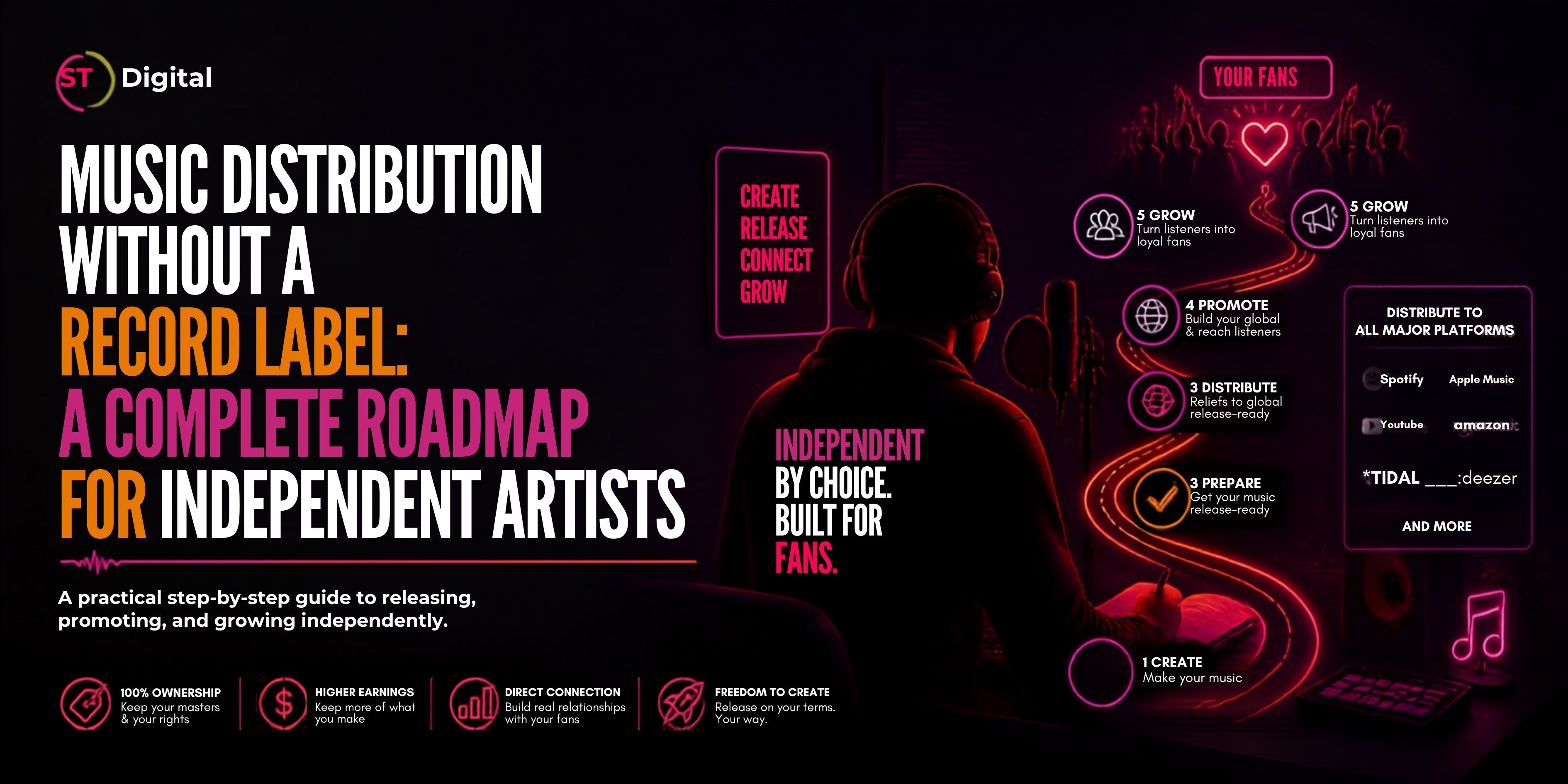
For many years, releasing professional music meant signing a contract with a record label. Labels traditionally helped artists with recording, promotion, distribution, marketing and monetization.
Today, independent artists have another option.
With modern music distribution services, artists can release their songs on major digital platforms without necessarily signing with a traditional record label.
This has changed the music industry significantly. A singer from Jaipur can release a song for listeners in Mumbai, Delhi, Dubai, London or Toronto. A Punjabi artist can build an international audience, while a Rajasthani, Haryanvi, Bhojpuri or Hindi artist can reach listeners far beyond their local market.
But independent music distribution is about much more than uploading an MP3.
Artists need a strategy covering music preparation, metadata, distribution, release planning, promotion, rights management, audience building and revenue tracking.
This guide explains the complete roadmap.
Can You Release Music Without a Record Label?
Yes.
Independent artists can use a digital music distributor to deliver their recordings to supported streaming and digital platforms.
A distributor acts as a connection between the artist and digital music services.
Instead of negotiating separately with every platform, an artist can submit a release through a distribution platform and have it delivered to multiple services.
ST Digital describes its music distribution process as:
Register → Upload Music → Distribute Worldwide → Receive Earnings
The platform says artists can upload tracks, albums or singles, distribute them globally and monitor earnings through its reporting system.
What Does a Record Label Normally Do?
Before deciding to remain independent, it is useful to understand what a traditional record label can provide.
A label may be involved in:
· Recording investment
· Artist development
· Marketing
· Music distribution
· Public relations
· Playlist campaigns
· Video production
· Brand partnerships
· Touring support
· Rights management
However, signing with a label can also mean sharing control, revenue or rights according to the contract.
An independent artist can instead choose individual service providers and maintain greater control over their career.
That does not mean independent artists have to do everything alone.
They can build a team around specific needs such as:
· Music production
· Distribution
· Graphic design
· Video production
· Social media
· PR
· Marketing
· Legal support
· Booking
Independent Artist vs Record Label: What’s the Difference?
The biggest difference is usually control and responsibility.
Traditional Label Model
Artist → Record Label → Distributor → Digital Platforms → Audience
The label may manage several parts of the process.
Independent Model
Artist → Distributor → Digital Platforms → Audience
The artist manages more of the strategy while using specialized services where needed.
The independent model can give artists greater flexibility, but it also requires more planning and responsibility.
Step 1: Finish Your Music Professionally
Before thinking about distribution, make sure your music is ready.
Your final track should be professionally mixed and mastered.
Prepare the final version of your recording rather than uploading unfinished versions.
You should also have the following information ready:
· Song title
· Artist name
· Featured artist
· Composer
· Lyricist
· Producer
· Genre
· Language
· Release date
· Copyright information
· ISRC, where applicable
· Explicit-content information, where applicable
The better prepared your release is, the easier the distribution process becomes.
Step 2: Create Professional Cover Artwork
Your cover artwork represents your song across digital platforms.
A professional cover should:
· Match your artist identity
· Represent the song
· Be visually clear
· Follow platform requirements
· Avoid unnecessary information
· Look professional on both desktop and mobile
For regional artists, artwork can also communicate cultural identity.
For example:
· Rajasthani music can use regional visual elements.
· Punjabi music can use a contemporary Punjabi aesthetic.
· Hindi pop can use modern commercial artwork.
· Devotional music can use appropriate spiritual imagery.
Your artwork and music should feel like part of the same brand.
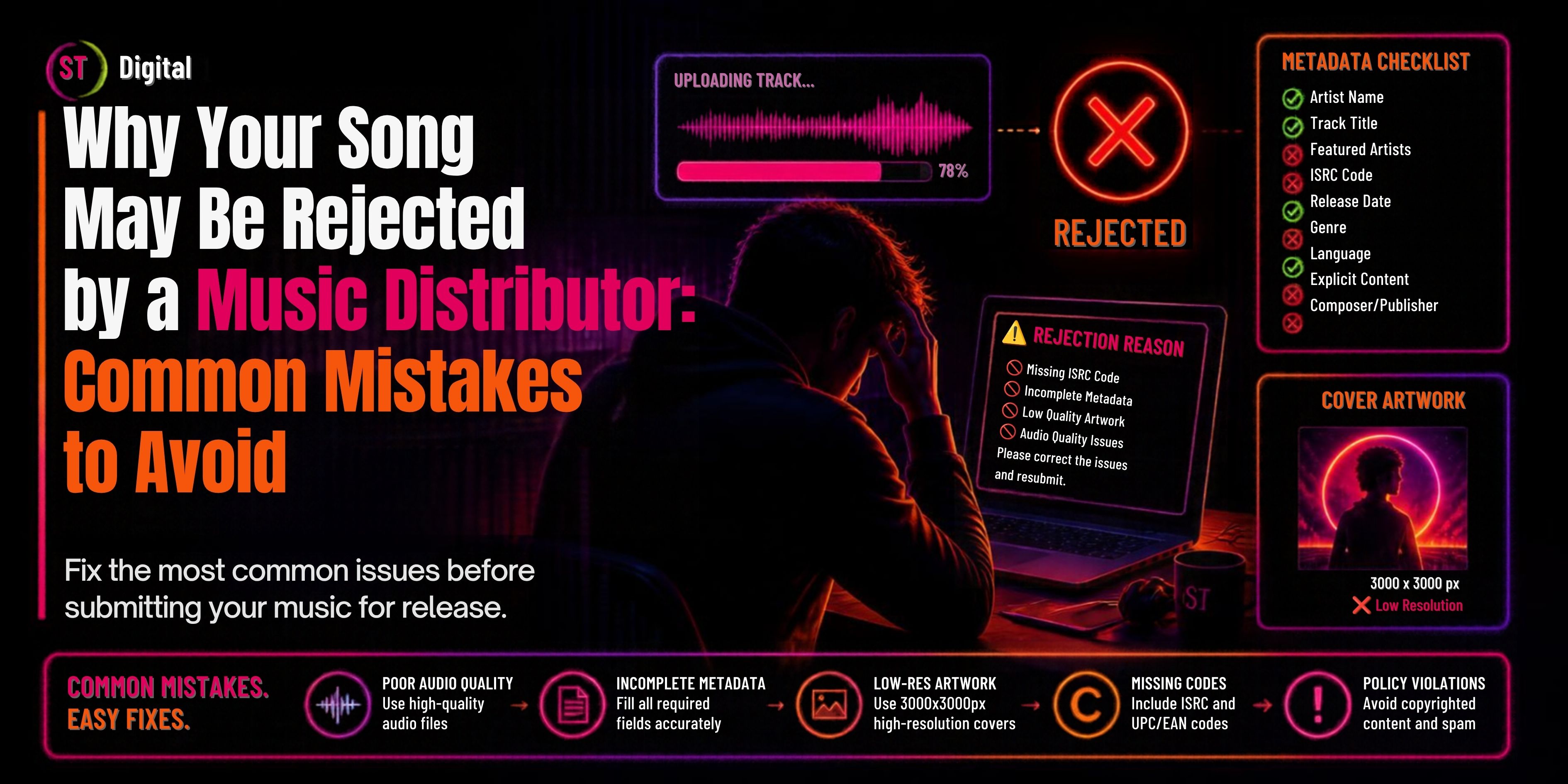
Step 3: Get Your Metadata Right
Metadata is one of the most important parts of music distribution.
It tells digital platforms who created the song and what the release contains.
Important metadata can include:
· Song title
· Primary artist
· Featured artists
· Composer
· Lyricist
· Producer
· Language
· Genre
· Release date
· ISRC
· UPC
· Copyright information
Mistakes in metadata can create problems with artist profiles, credits and royalty reporting.
Before submitting your song, check every field carefully.
Step 4: Choose the Right Music Distributor
Choosing a music distributor is one of the biggest decisions an independent artist makes.
Don’t select a distributor simply because it is popular.
Look at factors such as:
Platform Coverage
Does the distributor reach the platforms where your audience listens?
Global Distribution
If you want international listeners, check whether your distributor provides worldwide distribution.
Revenue Reporting
Can you see your earnings and performance information?
Rights
Understand what rights you are giving the distributor and for how long.
Support
Is help available if your release has a problem?
Distribution Costs
Compare upfront fees, commissions and other charges.
ST Digital currently advertises global music distribution and states that its platform has no upfront or hidden fees for its distribution service.
Always review the current service terms before making a commercial decision.
Step 5: Upload Your Release
Once your music, artwork and metadata are ready, submit your release through your distributor.
The upload process generally involves:
1. Creating an account
2. Entering release information
3. Uploading the audio
4. Uploading artwork
5. Adding contributor information
6. Selecting platforms
7. Choosing the release date
8. Reviewing the information
9. Submitting the release
ST Digital’s distribution process specifically describes registering an account, uploading music and distributing the release worldwide.
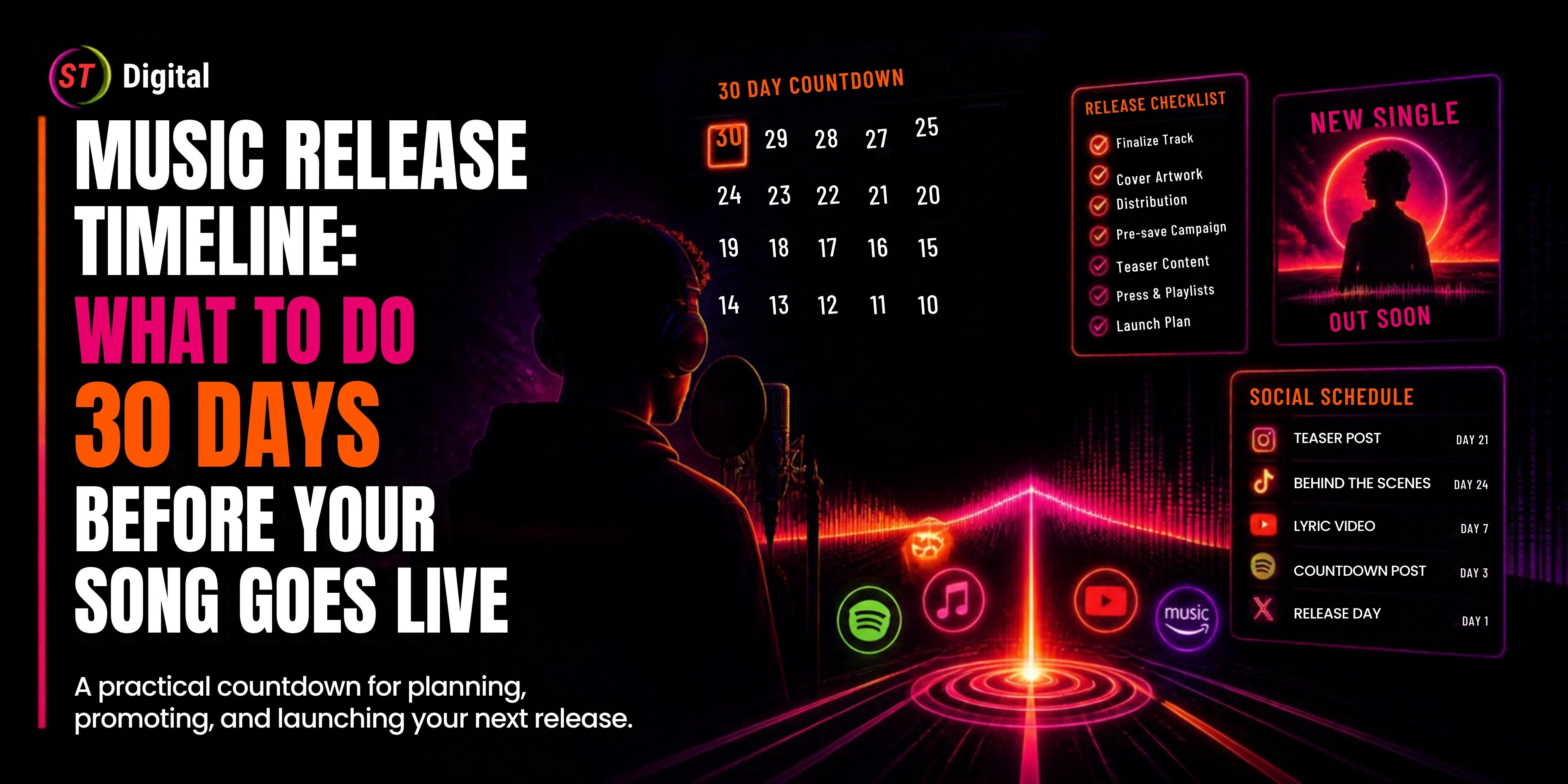
Step 6: Choose Your Release Date Carefully
Don’t upload your song at the last possible moment.
Give yourself enough time to:
· Check the release
· Prepare promotional content
· Create social media posts
· Prepare music videos
· Contact creators
· Plan your launch
· Pitch for relevant playlist opportunities
A release date should be part of your marketing strategy, not simply an upload setting.
Step 7: Distribute Your Music Worldwide
One of the biggest advantages of independent digital distribution is the ability to reach listeners outside your home country.
ST Digital lists a broad network of digital distribution platforms, including Spotify, Apple Music, YouTube Music, Amazon Music, Deezer, Gaana, JioSaavn/Saavn, TikTok, Facebook, Pandora and other services.
This can be particularly valuable for:
· Punjabi artists targeting international audiences
· Hindi independent artists
· Rajasthani artists
· Haryanvi artists
· Bhojpuri artists
· Indian devotional artists
· Regional folk artists
· Independent pop and hip-hop artists
Your language does not have to limit your audience.
Step 8: Don’t Depend on Distribution Alone
This is one of the most important lessons for independent artists.
Distribution makes your music available. Marketing helps people discover it.
Uploading a song to Spotify or Apple Music does not guarantee streams.
After distribution, you need to actively promote the release.
Your promotional strategy can include:
· Instagram Reels
· YouTube Shorts
· TikTok content
· Music videos
· Lyric videos
· Behind-the-scenes videos
· Live performances
· Influencer collaborations
· Creator campaigns
· Interviews
· Playlist outreach
· Social media advertising
Step 9: Turn One Song Into Multiple Pieces of Content
A common mistake is creating one post saying:
“My new song is out now.”
and then stopping.
Instead, use one song to create an entire content campaign.
For example:
Before Release
· Song teaser
· Cover reveal
· Countdown
· Studio footage
· Song story
Release Day
· Official announcement
· Music video
· Streaming links
· Short-form clips
· Artist message
After Release
· Acoustic version
· Live performance
· Lyric clip
· Fan reaction
· Behind-the-scenes footage
· Dance Reel
· Remix content
· Creator collaboration
One song can become weeks of content.
Step 10: Build Your Artist Brand
Independent artists need to think beyond individual songs.
Build a recognizable identity.
Keep your:
· Artist name
· Profile image
· Logo
· Social media branding
· Visual style
· Genre
· Communication style
consistent.
If listeners discover one song today and another six months later, they should immediately recognize that both belong to the same artist.
Step 11: Use Social Media for Discovery
Social media is an important part of modern music marketing.
Instead of only sharing links, create content that gives listeners a reason to interact with your music.
Storytelling
Explain what inspired the song.
Performance
Perform your strongest section live.
Short-Form Content
Use the catchiest part of the track in short videos.
Collaboration
Work with dancers, creators and other musicians.
Audience Participation
Ask fans to create videos using your song.
This can help turn your music into content rather than simply an advertisement.
Step 12: Explore Caller Tune Distribution
Independent artists can also explore additional digital uses for their music.
ST Digital offers Caller Tune Distribution, allowing artists to make selected music available as caller tunes across supported networks and services.
ST Digital’s caller-tune page states that the service supports CRBT distribution across Indian telecom networks and mentions platforms such as JioSaavn, Wynk and Vi. It also states that artists retain 100% of royalties and ownership under the service described on the page.
For artists with a catchy hook or highly recognizable chorus, caller tunes can provide another way for audiences to interact with their music.
Step 13: Think About Music Video Distribution
For many artists, the audio release is only one part of the campaign.
A professional music video can help tell the story of your song visually.
Independent artists can combine:
Audio Distribution + Video Distribution + Social Media + Creator Marketing
ST Digital also provides Video Distribution Services as part of its broader digital distribution offering.
This can help artists think about their release as a complete digital campaign rather than an audio upload alone.
Step 14: Don’t Ignore Lyrics
Lyrics can also contribute to music discovery and fan engagement.
When listeners search for lyrics, accurate lyric availability can make it easier for them to engage with the song.
ST Digital lists Lyrics Distribution Services alongside music, video and caller-tune distribution.
For regional artists, accurate lyrics can be particularly useful because listeners may want to understand, sing along with or share the words of the song.
Step 15: Understand Your Music Rights
Independent artists should understand what they own.
There can be different rights associated with:
· Sound recording
· Composition
· Lyrics
· Publishing
· Performance
· Licensing
· Video
· Digital uses
If multiple people worked on the song, clearly document their contributions and agreements.
For example:
Artist: Vocal performance
Composer: Melody
Lyricist: Lyrics
Producer: Production
Label/Owner: Master recording
Clear documentation can help avoid disputes later.
Step 16: Track Your Music Performance
Independent artists have one major advantage over the traditional model: access to digital data.
Monitor available information such as:
· Streams
· Listeners
· Saves
· Audience locations
· Platform performance
· Social engagement
· Revenue
· Popular songs
ST Digital highlights comprehensive analytics as one of its music distribution features, allowing artists to gain insights into their music’s performance.
Use the data to make better decisions.
For example, if a song unexpectedly performs well in a particular city or country, you can increase promotion in that market.
Step 17: Build a Release Calendar
Don’t release music randomly.
Create a simple annual or quarterly plan.
For example:
January: Single 1
March: Single 2
May: Collaboration
July: Single 3
September: EP
November: Major release
The exact schedule depends on your music and audience, but consistency is important.
A catalogue of multiple songs gives listeners more opportunities to discover your work.
Step 18: Build a Team Around Yourself
Being independent doesn’t mean doing every job yourself.
As your career grows, consider working with specialists.
You may eventually need:
· Music producer
· Mixing/mastering engineer
· Graphic designer
· Video director
· Photographer
· Social media manager
· Digital marketer
· PR professional
· Booking manager
· Legal professional
The difference is that you choose the people and services you need, rather than depending entirely on one organization.
Independent Music Distribution Checklist
Before releasing your next song, use this checklist:
Music
☐ Final mix completed
☐ Master completed
☐ Audio quality checked
Metadata
☐ Song title correct
☐ Artist name correct
☐ Composer credited
☐ Lyricist credited
☐ Featured artists credited
☐ ISRC/identifiers checked
Artwork
☐ Professional cover created
☐ Artwork meets platform requirements
☐ Artist branding is consistent
Distribution
☐ Distributor selected
☐ Platforms selected
☐ Release date selected
☐ Release submitted
Marketing
☐ Teaser created
☐ Reels/Shorts prepared
☐ Music video planned
☐ Social posts scheduled
☐ Creator outreach planned
Post-Release
☐ Streaming performance monitored
☐ Social engagement tracked
☐ Revenue reports reviewed
☐ New content created
☐ Next release planned
Common Mistakes Independent Artists Should Avoid
1. Releasing Without a Marketing Plan
Distribution alone does not create an audience.
2. Uploading at the Last Minute
Give your release enough time for processing and preparation.
3. Incorrect Metadata
A small spelling mistake can create bigger problems later.
4. Inconsistent Artist Branding
Listeners should be able to recognize your identity across platforms.
5. Buying Fake Streams
Avoid artificial streams and engagement. Focus on genuine audience growth.
6. Ignoring Your Rights
Know who owns the master and composition before releasing the music.
7. Stopping Promotion After Release Day
A song can continue gaining listeners weeks or months after launch.
How ST Digital Supports Independent Artists
ST Digital positions its Music Distribution Services as a solution for artists who want to distribute their music globally without relying solely on traditional record-label structures.
The platform states that artists can:
· Register a free account
· Upload tracks, albums and singles
· Distribute music worldwide
· Monitor earnings
· Access analytics
· Receive account management and support
ST Digital also states that its platform provides free music distribution and no upfront or hidden fees for the distribution service described on its current page.
Its broader Digital Distribution Services cover music, videos, lyrics and caller tunes across a wide network of digital platforms.
For an independent artist, this means you can build a release strategy around the services you actually need.
Final Thoughts
You don’t necessarily need a traditional record label to release professional music.
Today, an independent artist can create music, work with professional collaborators, use a music distributor, distribute globally, promote through social media, monitor analytics and build an audience directly.
The independent route gives artists more responsibility, but it can also provide more control over their music career.
The most effective roadmap is:
Create Great Music → Prepare Metadata → Choose a Distributor → Distribute Globally → Promote Consistently → Track Results → Build Your Audience → Release Again
Your distributor gets the music onto digital platforms.
Your marketing gets people to discover it.
Your music keeps them listening.
That is the foundation of a modern independent music career.
Frequently Asked Questions (FAQs)
1. Can I distribute music without a record label?
Yes. Independent artists can use digital music distribution services to deliver their recordings to supported streaming and digital platforms without necessarily signing with a traditional record label.
2. What does a music distributor do?
A music distributor helps deliver recordings to digital platforms and may provide services such as metadata management, revenue reporting, analytics and rights-related tools, depending on the agreement.
3. Can independent artists distribute music worldwide?
Yes. A global distribution service can deliver music to supported international digital platforms. ST Digital states that its music distribution service provides worldwide distribution.
4. Is independent music distribution free?
Some distributors offer free distribution or plans without upfront fees. ST Digital currently advertises free music distribution and no upfront or hidden fees on its music distribution page.
5. Do independent artists keep ownership of their music?
Ownership depends on the agreements and rights involved. Artists should always read their distributor agreement and understand which rights they are granting.
6. Can I distribute a song that has already been released?
This depends on the distributor, platform and rights situation. When moving an existing release, make sure the metadata and identifiers are consistent to avoid unnecessary complications.
7. Can I distribute music and caller tunes separately?
Yes. Music distribution and caller-tune distribution are separate services. ST Digital offers both Music Distribution and Caller Tune Distribution.
8. How can independent artists make money from their music?
Potential revenue sources can include streaming, downloads, caller tunes, licensing, YouTube and other eligible digital uses. Actual earnings depend on rights ownership, usage, platform terms and the applicable distribution agreement.
9. Is a record label still useful?
Record labels can provide funding, marketing, artist development and other resources. However, independent distribution gives artists another path and allows them to build a career without necessarily signing with a label.
10. What is the biggest advantage of independent music distribution?
The biggest advantages can include greater flexibility, direct access to digital distribution, control over release planning and the ability to build an artist brand independently.

 October 7, 2026